Requesting a free AI visibility check triggers a 1-2 business day process in which we test your submitted brand across 2 AI platforms using 10 buyer questions drawn from five documented journey themes, then send you a specific findings report. No sales call happens before you see results. This walkthrough covers each step: the turnaround window, the platforms, how we pick your questions, what the report contains, and what the free check deliberately leaves out.
The 1-2 Business Day Window: What Starts When You Submit
The clock on your free check is 1-2 business days from submission to report delivery. When you submit the request form, you give us a brand name, a website, and a short description of what the company makes: an API, a CDMO service line, an excipient grade, a nutraceutical SKU, or an oral care product. That is the input. From there, the work is ours, not yours.
The first thing that happens is scoping. We read your website and establish what category you actually compete in, because an AI assistant recommending a contract manufacturer draws on different signals than one naming an excipient supplier. Then we draft the 10 questions, run them against two platforms, and record how your brand appears, or does not appear, in the answers. The turnaround is short because the scope is bounded: two platforms, ten questions, one brand.
The Two Platforms We Test and Why
The free check runs on 2 of the 5 AI assistants we test in full: ChatGPT, Gemini, Perplexity, Claude, and Grok. We use two platforms in the free check because that is enough to show you whether your brand surfaces at all when a buyer asks an AI assistant for a supplier recommendation, without stretching a no-cost offer into a full engagement.
The two platforms we select give you a read on both a conversational assistant and a retrieval-oriented one, so you see how your brand behaves under different answer-generation mechanics. If your product pages lack structured data or clear category language, that gap tends to show up across platforms rather than on one. The free check is designed to surface whether that pattern exists for your brand before you decide whether to look deeper.
How We Pick the 10 Questions for Your Business
The 10 questions are built around your specific category and buyer, not pulled from a fixed template. A CDMO gets capability and capacity questions: who can handle sterile fill-finish at a given scale, who offers high-potency API handling. An excipient supplier gets compliance and grade questions: which suppliers meet a specified pharmacopeia standard, who documents elemental impurity profiles. A nutraceutical brand gets discovery and comparison questions a formulator or procurement lead would actually type.
This is where the methodology matters. Our founder, M Netrajit Singha, is a B.Pharma graduate with 12+ years of Pharma ERP implementation and Computer System Validation experience, so the questions reflect how pharma buyers phrase procurement and compliance queries rather than generic marketing prompts. The goal is to test your brand against the questions a real buyer would ask, phrased the way that buyer would ask them.
The Five Buyer Journey Themes Behind Every Question Set
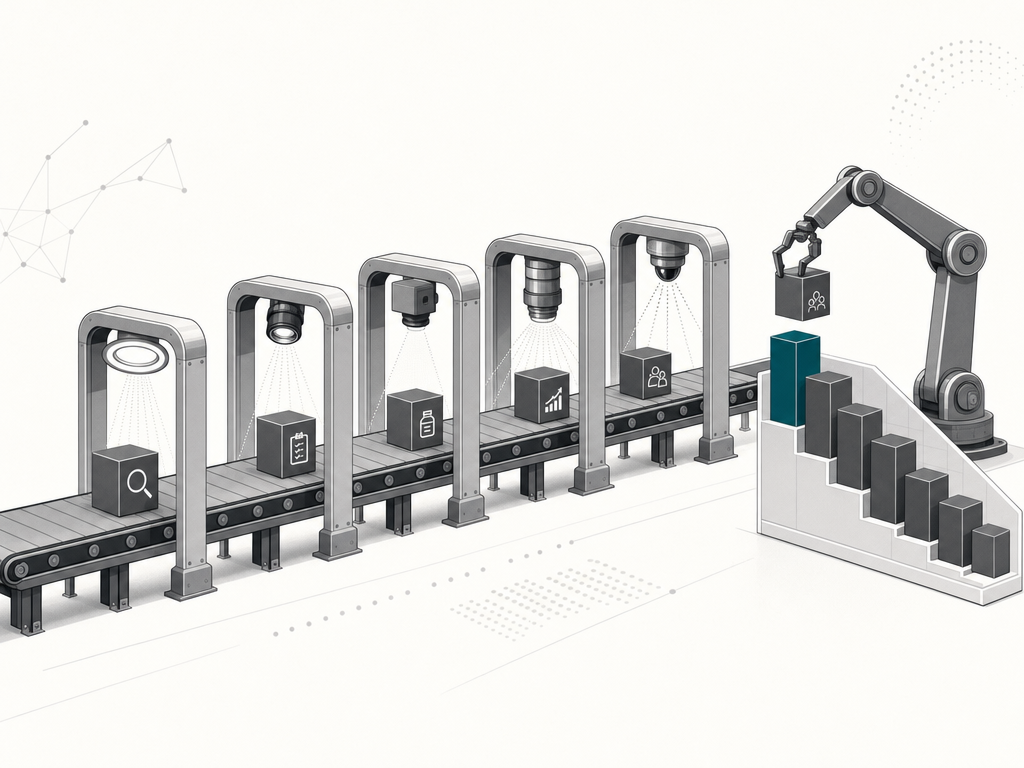
Every 10-question set is drawn from five documented buyer journey themes: discovery, evaluation, product/capability, commercial, and support. These themes map to the stages a pharma or healthcare buyer moves through, and each one tests a different way your brand might come up in an AI answer.
Discovery questions test whether an assistant names you when a buyer is still finding candidates. Evaluation questions test whether you appear when a buyer is comparing shortlisted suppliers. Product/capability questions test whether your specific offerings surface against a technical requirement. Commercial questions cover pricing, minimum order, and terms context. Support questions cover documentation, regulatory help, and post-sale service. We spread the 10 questions across these themes so the report reflects your brand's visibility at multiple points in a buyer's path, not just one.
What Shows Up in the Report
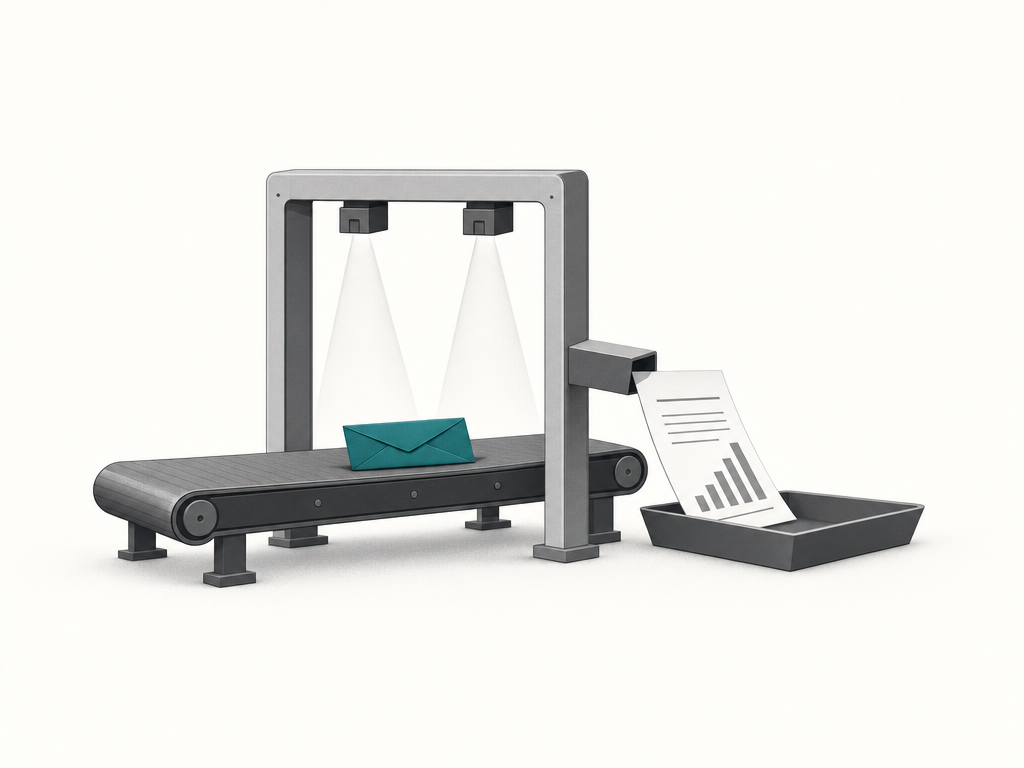
The report is a specific findings document, not a generic marketing teaser. For each of the 10 questions, you see the platform tested, the question as asked, and how your brand appeared in the answer: named directly, mentioned in passing, absent entirely, or displaced by a competitor the assistant named instead.
Beyond the per-question results, the report groups what it found into patterns. If your brand is invisible in discovery questions but surfaces in support questions, that tells you something different than the reverse. The findings are written to be read by someone deciding where to focus, so each observation is tied to what produced it: a missing product page, thin category language, absent structured data, or no third-party references the assistant could draw on. You get the observation and the likely cause, not a score with no explanation.
No Sales Call Required Before You See Results
You receive the report before any sales conversation. We do not gate the findings behind a call, a demo, or a discovery meeting. You submit the form, we run the check, and the report lands in your inbox within the 1-2 business day window.
This is deliberate. A process walkthrough adjacent to a conversion offer can easily turn into a lead-capture funnel where the real information stays locked until you talk to someone. We run it the other way: the findings come first, and whether you want to go further is your decision to make after you have read them. If the report shows your brand is well-represented across both platforms, that is a useful thing to know, and it does not obligate you to anything.
What the Free Check Does Not Cover
The free check is a baseline, not a full audit, and it leaves specific things out. It does not test the 3 remaining platforms. If the free check runs on two of ChatGPT, Gemini, Perplexity, Claude, and Grok, the other three are not in scope. It does not include competitive benchmarking, so you see how your brand appears but not a structured comparison against named competitors across every query.
It also does not include the depth of the Full AEO Readiness Audit: the full 5-platform coverage, competitive benchmarking, and a ranked remediation plan scored by impact and effort. The free check is designed to answer one question honestly: does your brand show up when AI assistants answer buyer questions in your category? Treating it as equivalent to the full audit would misrepresent what two platforms and ten questions can tell you.
What Usually Happens After You Read the Report
After reading the report, the natural next step depends on what it found. If your brand surfaced cleanly across both platforms and across the journey themes we tested, you may simply bank the baseline and revisit it later as the AI landscape shifts. If the report surfaced gaps, the next step is deciding whether to close them yourself or to move to the Full AEO Readiness Audit for complete 5-platform coverage, competitive benchmarking, and a ranked remediation plan.
Either way, the free check hands you a factual starting point. You know where your brand stands on two platforms, which buyer journey themes it is weak in, and what likely caused the gaps. That is enough to make the next decision on evidence rather than guesswork.
Get Your Free AI Visibility Check
Request the Free Check