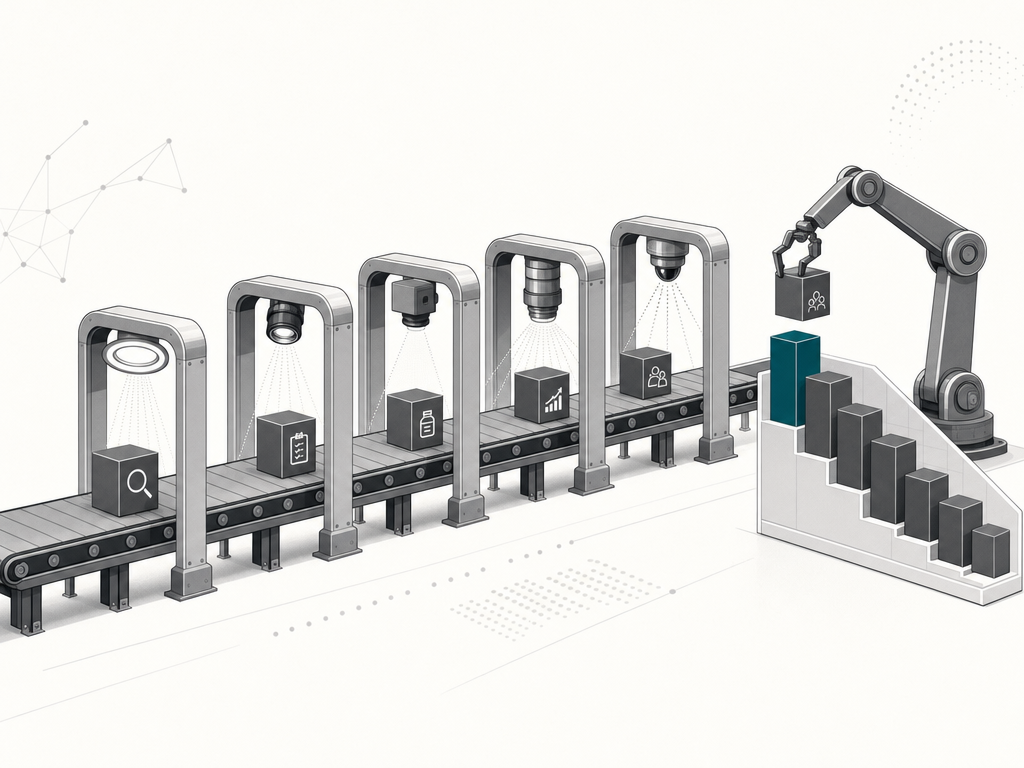
The Full AEO Readiness Audit is a defined multi-stage process that covers all 5 AI platforms (ChatGPT, Gemini, Perplexity, Claude, Grok) and 5 buyer-journey themes (discovery, evaluation, product/capability, commercial, support), ending in a findings report ranked by impact and effort. Each stage has specific inputs and outputs. This is not generic consulting output. Below is the walkthrough, stage by stage.
What the Full AEO Readiness Audit covers at a glance
The Full Audit tests how your business appears across 5 AI platforms when buyers ask real questions across 5 buyer-journey themes. The platforms are ChatGPT, Gemini, Perplexity, Claude, and Grok. The themes are discovery, evaluation, product/capability, commercial, and support. The output is a findings report where every item is ranked by impact and effort.
This differs from the Free AI Visibility Check in scope. The Free Check covers 2 platforms and 10 real buyer questions. The Full Audit covers all 5 platforms and adds competitive benchmarking. Both produce specific findings tied to actual AI responses, not generic advice.
The audit is built around inputs and deliverables. You supply context about your business and competitors. The audit team queries the platforms, captures the responses, benchmarks against competitors, ranks the findings, and delivers a report. Every stage below describes what the audit team does and what you receive.
Stage 1: Kickoff and scope alignment
Kickoff establishes the scope: your business category, your target buyers, and the competitors you want benchmarked against. This is where the audit team confirms whether you are an API manufacturer, a CDMO, an excipient supplier, a nutraceutical brand, or an oral care product manufacturer, because the buyer questions differ by category.
The inputs you supply at kickoff include your company name and website, the product or service lines you want tested, the buyer personas you sell to, and a list of competitors. The audit team uses these to build the question set in the next stage.
The output of kickoff is an agreed scope document. It lists the business category, the competitor set, and the buyer-journey themes to be tested. Nothing in later stages is improvised. The scope document is the reference the rest of the audit traces back to, which matters because the methodology is documented and traceable rather than reconstructed after the fact.
Stage 2: Buyer-journey question design across 5 themes
Question design turns your buyer context into the actual queries the audit will run across the 5 themes: discovery, evaluation, product/capability, commercial, and support. Each theme maps to a stage in how a real buyer moves from first awareness to active vendor consideration.
Discovery questions test how buyers find suppliers in your category when they have no shortlist yet. Evaluation questions test how buyers compare named suppliers. Product/capability questions test how your specific offerings, certifications, or technical capabilities surface. Commercial questions test how pricing, minimum order, and sourcing questions get answered. Support questions test how post-purchase and service queries resolve.
The input to this stage is the buyer context from kickoff. The output is the question set: the exact prompts the audit team will put to each AI platform. These are phrased the way a buyer would phrase them, because the point of the audit is to reproduce what buyers actually see, not what the business wishes they would ask.
Stage 3: Querying ChatGPT, Gemini, Perplexity, Claude and Grok
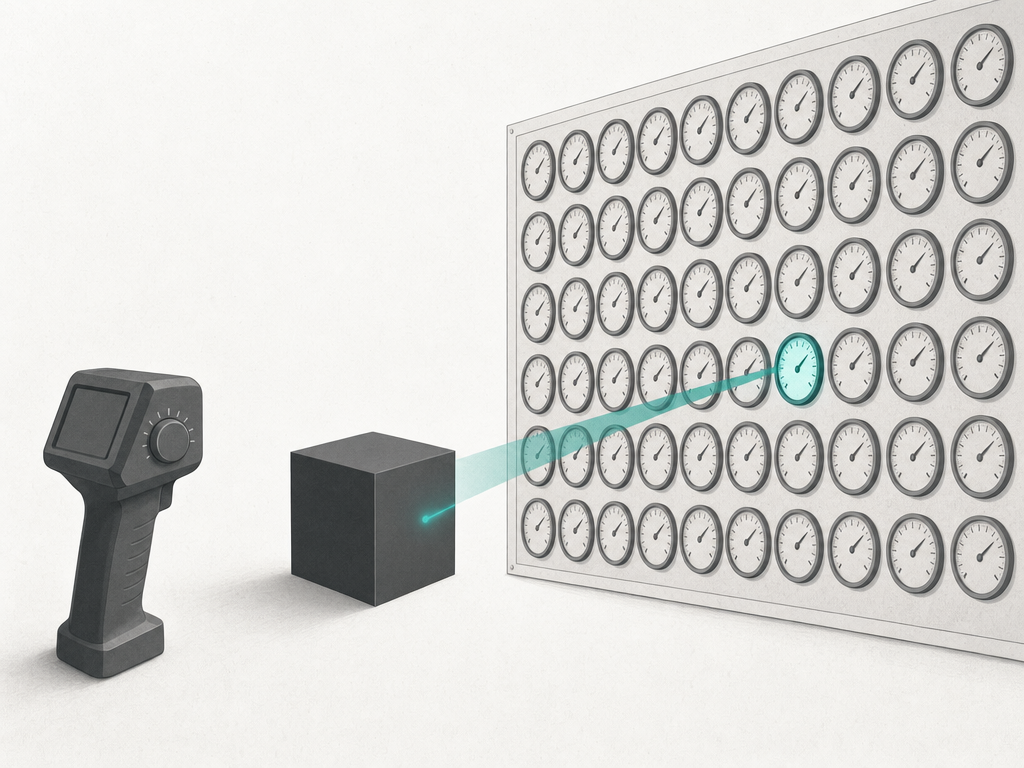
Querying runs the full question set against all 5 platforms and captures each response as evidence. The platforms are ChatGPT, Gemini, Perplexity, Claude, and Grok. Each platform is queried with the same set of buyer-journey questions so the results are comparable.
The audit team records what each assistant returns: whether your business is named, how it is described, which competitors appear alongside or instead of you, and which sources the assistant cites. Capturing the responses is what makes the findings traceable. A finding is not an opinion. It points back to a specific prompt put to a specific platform and the response that came back.
The input to this stage is the question set from Stage 2. The output is a captured response set: the raw material every finding is built from. Because the 5 platforms draw on different models and different source behaviour, the same buyer question can produce different answers across them, which is exactly what the audit is designed to surface.
Stage 4: Competitive benchmarking
Competitive benchmarking compares how you appear against the named competitors from your kickoff scope across the same questions and platforms. This is the stage that separates the Full Audit from the Free Check. Where the Free Check shows how you appear, the Full Audit shows how you appear relative to the suppliers you compete with for the same buyers.
The audit team looks at which competitors the assistants name in response to discovery and evaluation questions, how competitor descriptions compare to yours, and which competitor sources the assistants cite. When a competitor is named and you are not, that is a citation gap, and the benchmarking stage documents it against the specific prompt and platform where it occurred.
The input is the captured response set from Stage 3 plus your competitor list. The output is a benchmarking view that places your visibility next to your competitors', question by question, platform by platform.
Stage 5: Findings ranking by impact and effort
Findings ranking converts the captured evidence into a list of items, each scored on two axes: the impact of addressing it and the effort to address it. This is where the audit stops describing and starts prioritising. Every finding carries both scores so you can see where the quick, high-impact work sits and where the heavy lifts are.
Impact reflects how much a finding affects whether buyers see and consider you. Effort reflects what it would take to change it. A finding that a key competitor is cited in discovery questions where you are absent reads differently from a finding that a single product page lacks a detail. Both are recorded. Both are scored.
The two-axis ranking comes from a validation-engineering approach to documentation shaped by founder M Netrajit Singha's 12-plus years in Pharma ERP implementation and Computer System Validation. The input is the benchmarked evidence. The output is a ranked findings list where every item traces back to a captured response.
Stage 6: Final report delivery and walkthrough
Final report delivery packages the ranked findings into a document and walks you through it. The report contains the scope agreed at kickoff, the buyer-journey question set, the captured responses across all 5 platforms, the competitive benchmarking view, and the ranked findings list with impact and effort scores on every item.
The report is built to be read by people who were not on the kickoff call. Each finding names the platform, the buyer question, and the response that produced it. There is no step where you have to take the conclusions on trust. The evidence sits next to the finding.
Delivery includes a walkthrough so the audit team can explain the ranked list and answer questions about specific findings. The initial response to a Free Check request runs in 1 to 2 business days, which reflects that this is an active, documented operation rather than a one-off. The output of this stage is the report itself and your understanding of where to start.
Where the Audit fits in the Audit-Optimize-Build Authority-Measure-Repeat cycle
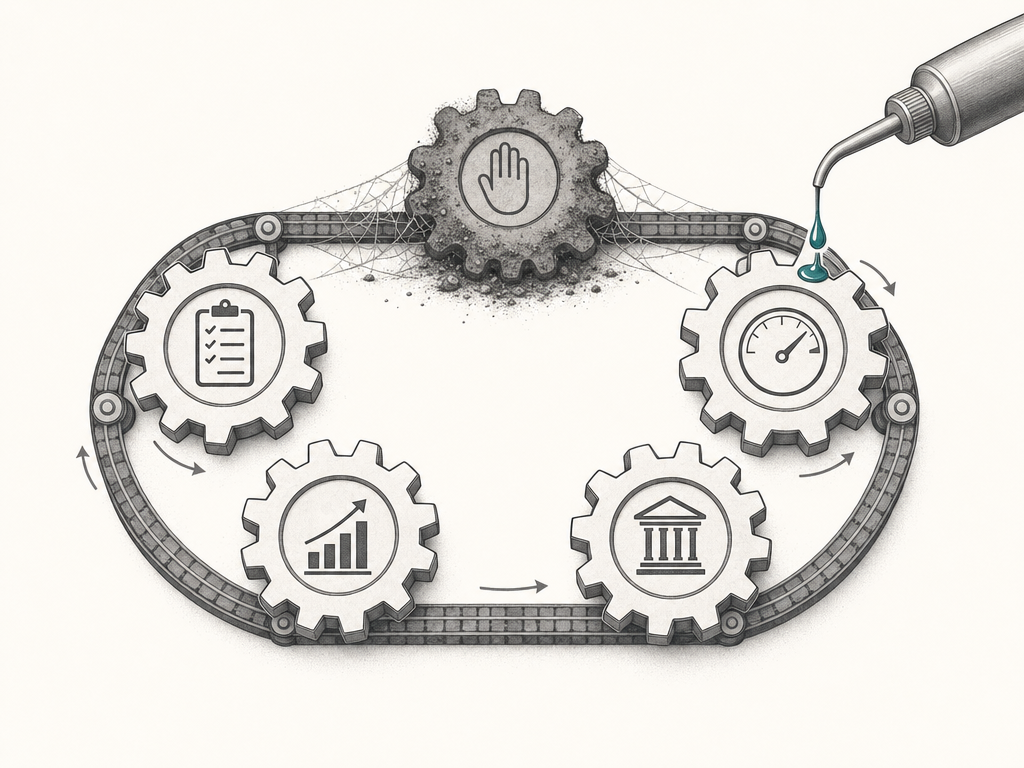
The Audit is the first step in a cycle: Audit, Optimize, Build Authority, Measure, Repeat. The Audit establishes where you stand across the 5 platforms today. Optimize acts on the ranked findings. Build Authority strengthens the signals AI assistants draw on. Measure re-runs the queries to see what moved. Repeat keeps the cycle running as the platforms and your competitors change.
The Audit's job in this cycle is to produce the baseline. You cannot optimise against something you have not measured, and you cannot measure change without a starting point. The ranked findings report is that starting point.
If you are evaluating whether to commission the Full Audit, the lower-friction entry point is the Free AI Visibility Check: 2 platforms, 10 real buyer questions, and specific findings you can read before deciding on the full engagement. Get Your Free AI Visibility Check.
Frequently asked questions
What happens during a Full AEO Readiness Audit from kickoff to final report?
The Full Audit runs through six stages: kickoff and scope alignment, buyer-journey question design across five themes, querying all five AI platforms, competitive benchmarking, findings ranking by impact and effort, and final report delivery with a walkthrough. Each stage has defined inputs and outputs. You supply business and competitor context at kickoff, and you receive a ranked findings report where every item traces back to a captured AI response.
How does the Full AEO Readiness Audit kickoff work?
Kickoff establishes the scope: your business category, target buyers, and the competitors you want benchmarked. You supply your company name, website, product lines, buyer personas, and a competitor list. The audit team confirms whether you are an API manufacturer, CDMO, excipient supplier, nutraceutical brand, or oral care manufacturer, since questions differ by category. The output is an agreed scope document that every later stage traces back to, keeping the methodology documented rather than improvised.
What buyer-journey themes are tested during the audit?
Five themes are tested: discovery, evaluation, product/capability, commercial, and support. Discovery tests how buyers find suppliers with no shortlist yet. Evaluation tests how buyers compare named suppliers. Product/capability tests how your specific offerings and certifications surface. Commercial tests how pricing and sourcing questions resolve. Support tests post-purchase and service queries. Each theme maps to a stage in how a real buyer moves from first awareness toward active vendor consideration.
How are the 5 AI platforms queried and the responses captured?
The full question set runs against ChatGPT, Gemini, Perplexity, Claude, and Grok, with the same questions put to each platform so results are comparable. The audit team records whether your business is named, how it is described, which competitors appear, and which sources are cited. Each captured response becomes the evidence a finding points back to. Because the platforms use different models, the same question can produce different answers, which the audit surfaces.
How are findings ranked by impact and effort?
Every finding is scored on two axes: impact, which reflects how much it affects whether buyers see and consider you, and effort, which reflects what it would take to change it. A competitor being cited in discovery questions where you are absent scores differently from a single product page missing a detail. Both are recorded and scored. The two-axis ranking reflects a validation-engineering approach to documentation, and each finding traces back to a captured response.
What does the final report contain and how is it delivered?
The report contains the agreed scope, the buyer-journey question set, the captured responses across all five platforms, the competitive benchmarking view, and the ranked findings list with impact and effort scores. Each finding names the platform, the buyer question, and the response that produced it, so the evidence sits next to the conclusion. Delivery includes a walkthrough where the audit team explains the ranked list and answers questions about specific findings.
What is the difference between the Free AI Visibility Check and the Full Audit?
The Free AI Visibility Check covers 2 platforms and 10 real buyer questions, and returns specific findings you can read before committing. The Full Audit covers all 5 platforms, tests the full five-theme question set, and adds competitive benchmarking that places your visibility next to named competitors question by question. The Free Check shows how you appear. The Full Audit shows how you appear relative to the suppliers you compete with for the same buyers.