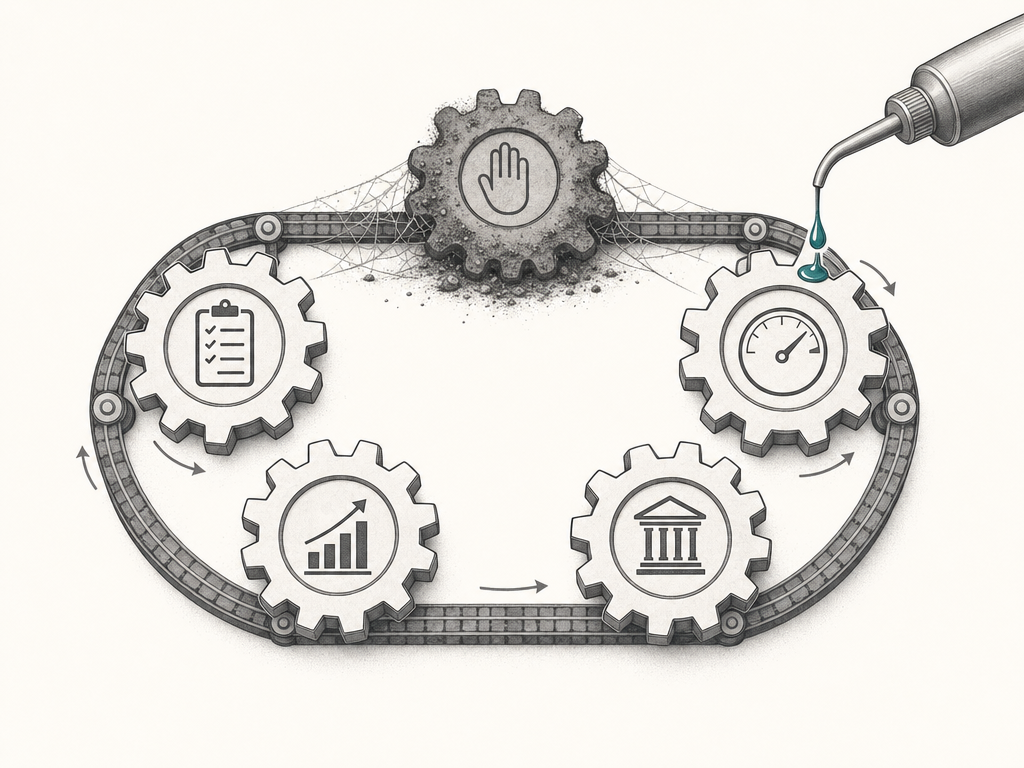
The AEO Dose cycle has five steps: Audit, Optimize, Build Authority, Measure, and Repeat. AI visibility is a maintenance discipline, not a one-time fix, because ChatGPT, Gemini, Perplexity, Claude, and Grok re-crawl and re-rank continuously while your competitors adjust their own content. This article explains what each step tests, what it produces, and why skipping the last two causes gains to decay.
Why AI Visibility Is a Cycle, Not a Snapshot
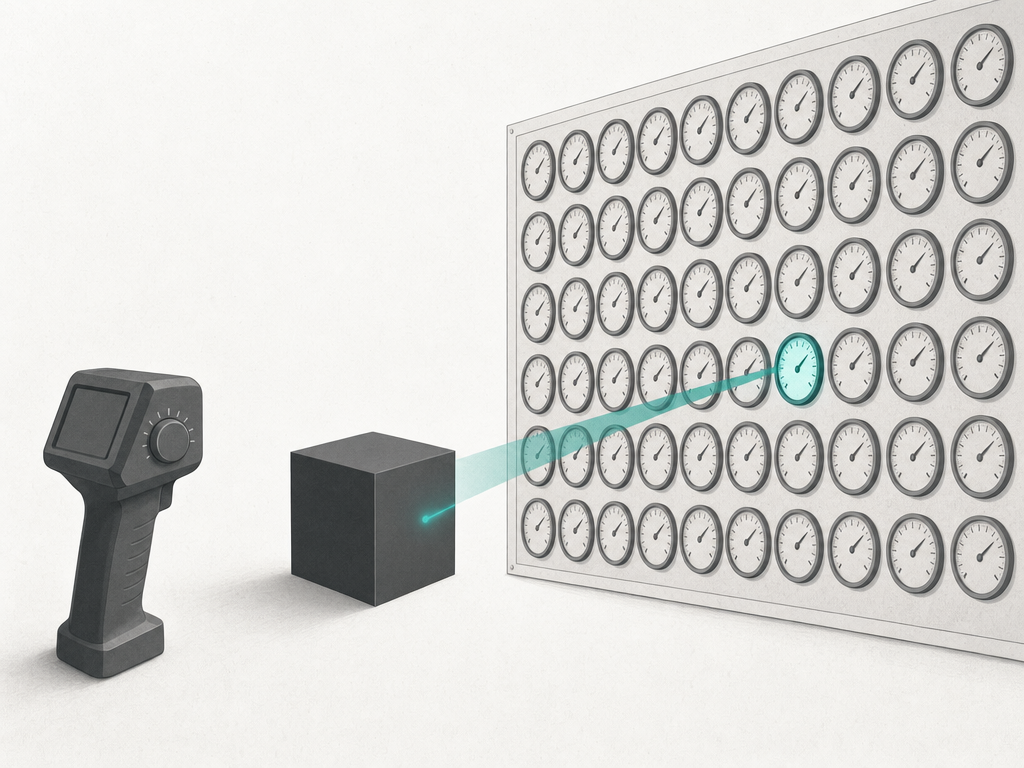
AI platforms re-crawl the web and re-rank their answers on a continuous basis, which means any single audit captures a moment that has already started to move. When ChatGPT, Gemini, Perplexity, Claude, or Grok refreshes its understanding of a supplier category, the answer a buyer receives next month may differ from the answer they received today, even if your website never changed. Your competitors are also publishing, adding schema, and earning third-party mentions during that same window.
A one-off audit tells you where you stand once. It does not account for the fact that the ground keeps shifting underneath that reading. This is the mechanism behind treating visibility as a discipline with a cadence rather than a project with an end date. If you want the foundational distinction between this work and classic search optimization, the AEO versus SEO foundational context covers what AEO is and why it behaves differently from SEO.
The founder's background in Computer System Validation shaped this structure. Validation work assumes nothing holds state permanently: you test, document, change, re-test, and schedule periodic review. The five-step cycle applies that same logic to AI answers.
Step 1: Audit - What Gets Tested and What Comes Out
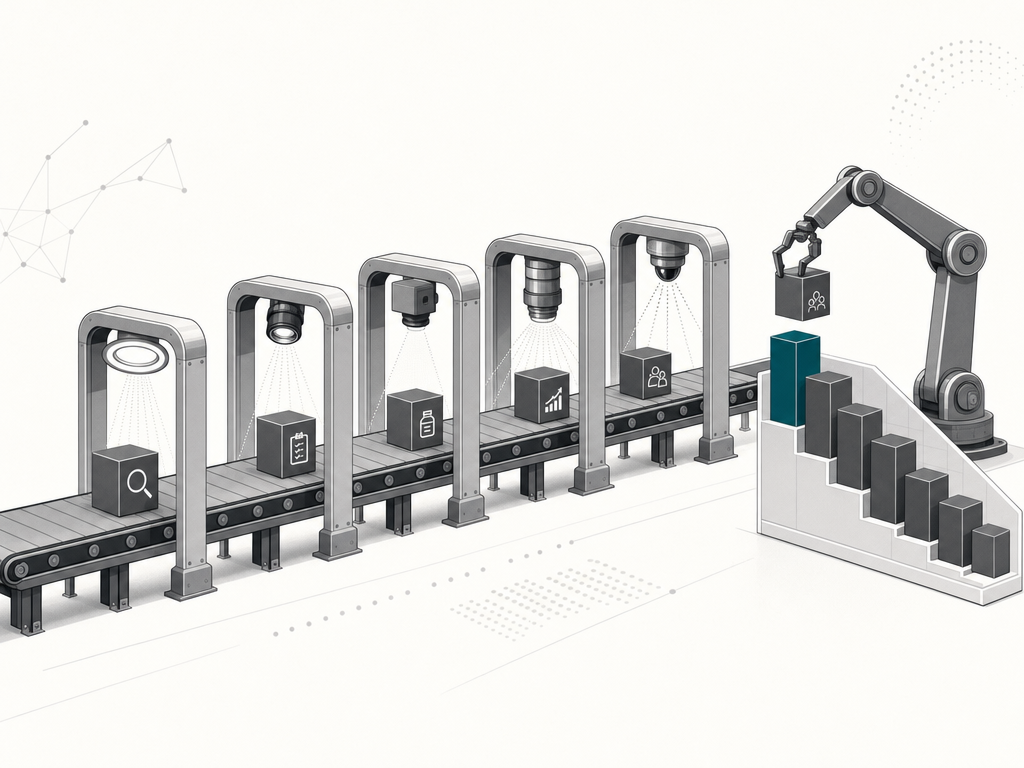
The Audit step tests how AI assistants answer real buyer questions about your category and produces a ranked list of findings. The Free AI Visibility Check runs 10 real buyer questions across 2 platforms. The Full AI Visibility & AEO Readiness Audit runs across all five platforms (ChatGPT, Gemini, Perplexity, Claude, and Grok) and organizes questions across five buyer journey themes: discovery, evaluation, product and capability, commercial, and support.
The input you provide is minimal: your company name, your website, and your supplier category. From there the Audit asks the kinds of questions a procurement lead or formulation scientist would actually type, then records whether you appear, how you are described, and which competitors show up instead. The output is not a generic checklist. It is a set of specific findings ranked by impact and effort, so you can see which gaps cost you citations and which fixes are cheap versus heavy. Turnaround runs 1 to 2 business days.
Step 2: Optimize - Content, Schema, and Website Changes
Optimize covers everything you change on your own property: content, schema markup, and website structure. These are the signals AI platforms read directly from your site when deciding how to describe you and whether to cite you. If the Audit found that an assistant could not tell whether you manufacture solid dose or sterile products, the Optimize step adds the content and structured data that makes your capabilities machine-readable.
Concrete changes under Optimize include writing capability pages that state what you make in plain language, adding Organization and Product schema so platforms can parse your offerings, and restructuring pages so each buyer question has a clear, extractable answer. The specific changes depend on your business type. A CDMO, an excipient supplier, and a nutraceutical brand each have different gaps, and the industry-specific AEO patterns for pharma suppliers show how the Optimize step applies to particular supplier categories.
The defining feature of Optimize is control. Every change here is on your side of the fence. That is also its limit, which is why the next step exists.
Step 3: Build Authority - Why This Is Separate From Optimize
Build Authority covers external signals that you do not directly control: third-party citations, references, directory listings, and mentions on sites other than your own. This is deliberately separate from Optimize because the two steps work on opposite sides of the boundary. Optimize changes what your site says about you. Build Authority changes what the rest of the web says about you.
The distinction matters because AI assistants weight corroboration. When an assistant decides whether to name you as a supplier, it is more confident when your claims are echoed by sources you did not write. A capability page saying you run high-potency containment is one signal. An industry directory, a trade publication, or a partner site confirming the same thing is a different and complementary signal. You can perfect every page on your website and still be under-cited if no external source backs up what those pages claim.
Build Authority depends on parties outside your control, which is why it has to be planned as its own workstream rather than folded into on-site optimization. Treating these as a single step causes teams to assume a schema fix will earn trust that only external corroboration can provide.
Step 4: Measure - How This Differs From the Initial Audit
Measure re-runs the same buyer questions across the same platforms after your changes have had time to be crawled, so you can compare against the original Audit baseline. The initial Audit establishes where you start. Measure establishes what moved. The two use the same question set and the same five platforms on purpose: a comparison is only meaningful when the test conditions are held constant.
This is where validation discipline shows up again. Measure documents the before-and-after against a fixed baseline rather than asking you to trust a general impression that things improved. It records which questions now surface you, which still do not, and whether a competitor has entered or left a given answer. Because AI platforms re-crawl on their own schedule, the Measure step waits for your Optimize and Build Authority changes to actually propagate before reading results. Measuring too early reads the old state and misattributes it to your work.
Step 5: Repeat - Cadence and Why Decay Happens Without It
Repeat means running the cycle again on a cadence, because the conditions that produced your Measure results keep changing after you stop looking. Decay happens through mechanism, not neglect. AI platforms re-crawl and re-rank continuously, so the model that cited you last quarter may be working from refreshed data this quarter. Competitors publish new capability content and earn their own third-party citations during the same period, shifting which suppliers an assistant names.
None of this requires you to have done anything wrong. A set of changes that earned you citations can lose ground simply because the surrounding field moved. Repeat exists to catch that drift before it compounds. The cadence depends on how fast your category moves and how actively competitors are investing, but the principle is fixed: a visibility reading has a shelf life. Treating the audit as a one-time deliverable assumes a stable environment that the platforms themselves do not provide.
How the Cycle Differs From a Traditional SEO Workflow
The cycle differs from an SEO workflow because it measures whether an AI assistant names and describes you correctly, not whether a page ranks on a results list. A traditional SEO audit checks keywords, backlinks, crawlability, and ranking positions against a search engine results page. The target is a ranked list of blue links that a human then clicks through.
AEO targets the answer itself. The question is not "where do we rank for this keyword" but "when a buyer asks an assistant to recommend suppliers, are we named, and is the description accurate." That changes what you test (real buyer questions, not keyword strings), what you measure (presence and framing inside an answer, not position on a list), and what Build Authority means (corroboration an AI model weights, not link equity alone). The feedback loop is also different: SEO rankings and AI answers update on their own schedules, so the Repeat cadence is tuned to AI platform behavior specifically.
Where to Start
Start by running the Audit step on your own business this week, before committing to any optimization work. The cleanest entry point mirrors the first step of the cycle: a free check that runs real buyer questions across two platforms and returns specific, ranked findings in 1 to 2 business days. That gives you a concrete baseline to decide whether a full five-platform audit is worth it, rather than guessing at where you stand.
Get a clear, honest baseline of how AI platforms talk about your business today, and a practical plan to close the gaps that matter most.
Get Your Free AI Visibility CheckFrequently asked questions
-
What happens during the Audit step and what does it produce?
The Audit runs real buyer questions against AI assistants and records whether you appear, how you are described, and which competitors surface instead. The Free Check uses 10 questions across 2 platforms; the Full Audit uses all five (ChatGPT, Gemini, Perplexity, Claude, Grok) across five buyer journey themes. It produces specific findings ranked by impact and effort, delivered in 1 to 2 business days, not a generic checklist. -
What is the difference between Optimize and Build Authority?
Optimize covers changes on your own property: content, schema markup, and website structure. Build Authority covers external signals you do not directly control, such as third-party citations, directory listings, and mentions on other sites. They are separate because they work on opposite sides of the boundary. Optimize changes what your site says about you; Build Authority changes what the rest of the web confirms about you. AI assistants weight that external corroboration. -
How is the Measure step different from the initial Audit?
The initial Audit establishes a baseline of where you start. Measure re-runs the same buyer questions across the same platforms after your changes propagate, so you can compare against that baseline and see what actually moved. Using identical test conditions is deliberate: a before-and-after comparison is only meaningful when the question set and platforms stay constant. Measure documents the change rather than relying on a general impression. -
Why is Repeat part of the cycle and how often does it happen?
Repeat exists because AI platforms re-crawl and re-rank continuously while competitors publish new content and earn their own citations. A visibility reading has a shelf life, so gains can decay through mechanism rather than neglect. The exact cadence depends on how fast your category moves and how actively competitors invest, but the principle holds: re-running the cycle catches drift before it compounds into lost citations. -
How does the AEO cycle differ from a traditional SEO audit?
An SEO audit checks keywords, backlinks, and ranking positions against a search results page, targeting a ranked list of links. The AEO cycle targets the answer an assistant gives: whether a buyer asking for supplier recommendations gets your name, and whether the description is accurate. That changes what you test (real buyer questions), what you measure (presence and framing inside an answer), and how Build Authority functions (corroboration an AI model weights). -
What inputs does each step require from the client?
The Audit needs your company name, website, and supplier category. Optimize needs access to make content, schema, and structure changes on your site. Build Authority needs cooperation on external listings, references, and partner mentions. Measure needs your Optimize and Build Authority changes to have propagated before re-testing. Repeat needs an agreed cadence. The documentation discipline running through each step keeps inputs and outputs traceable from one cycle to the next.