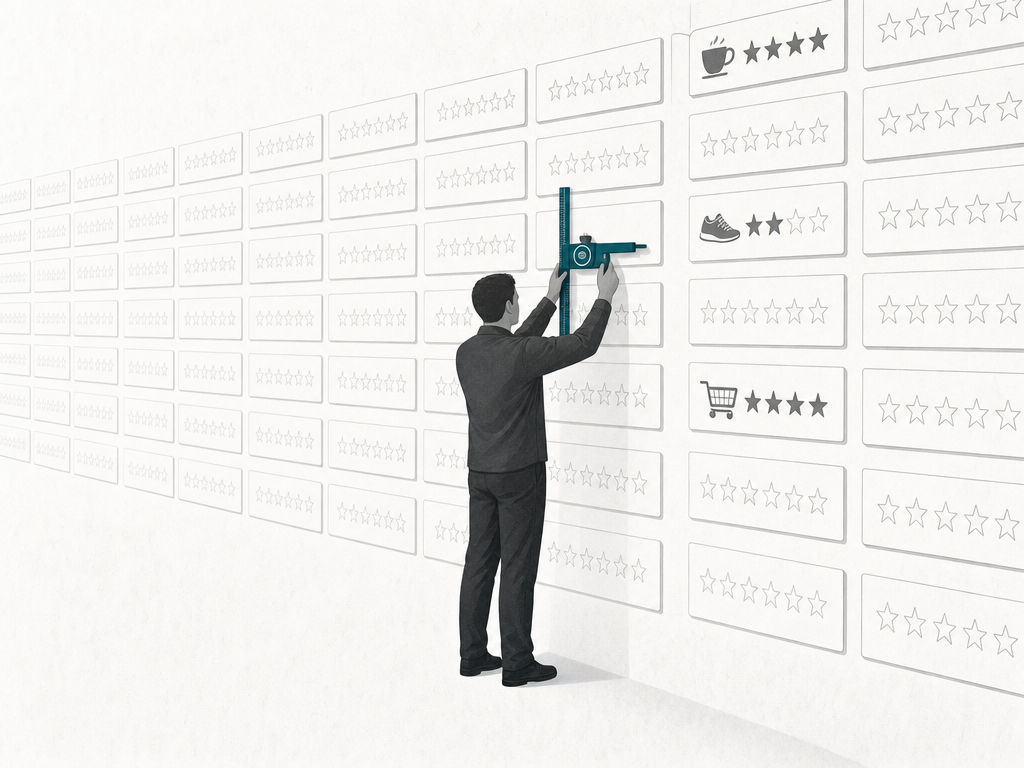
AI visibility optimization platforms vary widely in trustworthiness for pharma buyers. Most published reviews do not disclose which AI platforms were tested, which buyer questions were asked, or whether those questions reflect real pharma buyer journeys. Trust should be assessed through methodology transparency, not star ratings. AEO Dose uses 5 platforms and buyer journey themes as a concrete comparison anchor.
What you'll learn
- Why the trust problem is methodological, not cosmetic
- What AI visibility platforms claim to measure and influence
- Why review pages do not give pharma buyers enough verification detail
- What transparent inputs look like in a pharma-specific audit
- Which diligence questions to ask before signing an AEO vendor contract
- Where reviews can support diligence and where they stop helping
- How to begin with a methodology-first test instead of a review search
The Trust Gap Facing Pharma Buyers Evaluating AI Visibility Platforms
The trust gap is that pharma buyers are being asked to trust AI visibility claims without seeing the documented inputs needed to validate those claims. That is a weak position for an API manufacturer, CDMO, excipient supplier, nutraceutical brand, or oral care manufacturer whose commercial discovery depends on precise category language.
A review can say a platform improved visibility. That statement is not enough. A pharma buyer needs to know what was tested, where it was tested, which buyer questions were asked, what counted as visibility, and whether the test reflected how procurement, formulation, regulatory, commercial, and technical stakeholders ask questions.
This is where validation-industry thinking helps. In Computer System Validation, trust is not built by confidence statements. It is built by documented inputs, controlled execution, repeatable outputs, deviations, and evidence that another competent reviewer can inspect. AI visibility evaluation does not need to become CSV, but pharma buyers should borrow the discipline.
The limit of this article is important. Review-based trust is weak, but not useless. Methodology transparency is necessary, but not sufficient. A vendor can disclose a method and still have poor execution. The practical question is simpler: can the buyer see enough of the method to judge whether the review or case study deserves attention?
What AI Visibility Optimization Platforms Actually Claim to Do
AI visibility optimization platforms claim to measure and improve how brands appear when buyers ask AI assistants for recommendations, comparisons, explanations, or supplier shortlists. In pharma-facing markets, that means testing how a company appears when someone asks ChatGPT, Gemini, Perplexity, Claude, or Grok about API suppliers, CDMO capabilities, excipient sources, nutraceutical manufacturing, or oral care product manufacturing.
The claims in this 2024-2025 vendor category can include tracking brand mentions, monitoring citations, identifying missing entity signals, suggesting website updates, mapping competitor presence, or creating dashboards for AI search performance. Those claims are not automatically wrong. The problem begins when the claim is presented without enough detail to reproduce the evaluation logic.
For a pharma supplier, visibility is not one generic metric. A company may be visible for a branded query but absent from unbranded supplier discovery. It may appear in a general answer but not in a comparison. It may be mentioned for one capability but not another. It may surface in one AI assistant and disappear in another.
That is why a review saying "strong AI visibility platform" has limited value without test design. The buyer needs to separate dashboard features from evidence quality. A dashboard can look mature while the underlying test set is too broad, too consumer-oriented, or disconnected from the actual buyer journey.
Why Reviews of These Platforms Are Hard to Verify
Reviews are hard to verify because they describe user satisfaction more readily than they disclose the test conditions behind AI visibility claims. Generalist review platforms such as G2 and Capterra exist, but their category coverage does not give a pharma buyer reliable segmentation by API manufacturing, CDMO services, excipient supply, nutraceutical brands, or oral care manufacturing at the time of writing.
Star ratings can tell you whether users liked the interface, onboarding, support, or reporting workflow. They do not automatically tell you whether the platform tested pharma-relevant prompts, current AI assistants, regulated-market terminology, or buyer journey scenarios. A five-star review from a SaaS marketer and a useful evaluation for an excipient supplier are not the same artifact.
A case study has the same issue when it hides the inputs. If it says visibility increased, ask: visibility for what prompts? On which assistants? Against which baseline? Over what time frame? Was the tested question a real procurement-style question, a branded query, or a generic SEO phrase rewritten for AI?
This is not a criticism of every platform in the category. It is a structural diligence problem. AI visibility is still a young vendor category, and norms for publishing test sets, prompt categories, and evidence trails are still being established. Until those norms mature, pharma buyers should treat uninspected review claims as starting points, not proof.
What a Transparent Methodology Looks Like: Platforms, Questions, Buyer Journeys
A transparent methodology names the AI platforms tested, the buyer questions used, and the buyer journey themes those questions represent. Without those elements, a pharma buyer cannot judge whether the conclusion maps to its commercial reality.
At AEO Dose, the Free AI Visibility Check tests 2 platforms and 10 buyer questions. The Full AI Visibility and AEO Readiness Audit tests 5 platforms: ChatGPT, Gemini, Perplexity, Claude, and Grok. The questions are mapped against five buyer journey themes: discovery, evaluation, product or capability, commercial, and support.
That structure matters because pharma buying does not happen through one question type. A discovery question might ask for suppliers in a capability area. An evaluation question might compare CDMO options. A product or capability question might probe dosage form, excipient function, manufacturing technology, or documentation. A commercial question may involve geography, scale, or engagement model. A support question may involve technical resources, regulatory documentation, or contact pathways.
The transparent part is not the fact that AEO Dose uses this structure. The transparent part is that the structure can be inspected. A buyer can ask whether the platforms tested are current, whether the prompts are category-relevant, whether the outputs are recorded, and whether recommendations are tied back to observed gaps.
Methodology disclosure does not guarantee a good result. It creates a basis for review. That is the correct standard for a pharma buyer evaluating a vendor claim.
A Diligence Checklist for Pharma Marketing Leads Evaluating an AEO Vendor
A pharma marketing lead should ask for enough detail to understand the vendor's inputs, outputs, and evidence trail before signing anything. Treat the conversation like a lightweight validation review, not a software demo.
Use these questions:
- Which AI platforms do you test, and does the set include ChatGPT, Gemini, Perplexity, Claude, and Grok, or a narrower list?
- How many buyer questions are included in the assessment, and can we see the question categories before work begins?
- Are the questions mapped to discovery, evaluation, product or capability, commercial, and support themes?
- How do you separate branded visibility from unbranded supplier discovery?
- Do you preserve output examples from each AI assistant?
- What counts as a mention, citation, recommendation, or absence, and how do you handle conflicting answers across AI assistants?
- What deliverables will we receive beyond a dashboard?
- Which recommendations are tied to observed outputs, and which are assumptions, and how are they labeled?
- Do you understand pharma buyer language for APIs, CDMOs, excipients, nutraceuticals, or oral care?
- Can your findings be reviewed by our commercial, technical, or regulatory stakeholders?
- What will you not claim based on this audit?
The last question is not a trap. It is a quality check. A credible vendor should be able to state the boundary of its own evidence. If a vendor cannot distinguish between measured outputs and advisory interpretation, the buyer is being asked to accept a black box.
For related due diligence topics, see the broader review-evaluation guidance for AI services. The useful habit is the same across review pages, case studies, and demos: inspect the method before believing the conclusion.
Where Reviews Still Help, and Where They Do Not
Reviews still help when the buyer uses them to evaluate vendor conduct rather than pharma-specific AI visibility performance. Support quality, onboarding clarity, responsiveness, contract experience, and user interface friction can be useful signals.
Where reviews stop helping is at the point where the buyer needs evidence of pharma-specific testing. A reviewer may like a platform and still have no basis to judge whether it can evaluate a CDMO's visibility for sterile fill-finish questions, an excipient supplier's visibility for functional ingredient queries, or an API manufacturer's visibility in supplier comparison prompts.
Read reviews for operational patterns. Did users understand the deliverables? Were the reports usable? Did the vendor explain findings clearly? Did implementation require resources the buyer did not expect? Those are legitimate review questions.
Do not read reviews as proof that the platform can evaluate your segment. For that, ask for methodology. A review can support trust in the vendor's working style. It cannot replace disclosed test platforms, documented buyer questions, and output evidence.
This is also where pharma-specific evaluator background matters. Someone who is a B.Pharma graduate with 12+ years in Pharma ERP implementation and Computer System Validation approaches this problem differently from a generic marketing-tool reviewer. The concern is not whether the dashboard looks modern. The concern is whether the evidence can be inspected.
Starting With a Methodology-First Test Instead of a Review Search
A methodology-first test starts by asking what evidence will be produced, not by asking which vendor has the best-looking review page. That change prevents wasted budget on tactics that do not move the metric the buyer actually cares about.
For a pharma supplier, the first useful step is not a long vendor comparison spreadsheet. It is a small, inspectable test. Choose the AI platforms to be checked. Define buyer questions that match your commercial reality. Separate discovery, evaluation, product or capability, commercial, and support themes. Record the outputs. Then judge the recommendations against those outputs.
This approach does not promise visibility outcomes. It gives the buyer a defensible way to evaluate claims. If an AEO vendor can show the platforms tested, the questions asked, the observed outputs, and the reasoning behind the recommendations, the buyer has something to inspect. If the vendor cannot show those items, the review score is doing work it was not built to do.
The action for this week is straightforward: take one product line, service line, or capability area and write 10 real buyer questions that a procurement, formulation, technical, or commercial stakeholder could ask an AI assistant. Then ask any vendor you are evaluating how those questions would be tested, documented, and turned into recommendations.
For a practical first step, run a small transparent test before relying on review pages: Get Your Free AI Visibility Check
The brief included an external reference to "G2 or Capterra category pages for AI visibility or AEO tools" with a null URL, so no external link was inserted.