
Pharma buyers are using AI assistants like ChatGPT, Gemini, Perplexity, Claude, and Grok as a first touchpoint in supplier research. AEO Dose's five-platform testing methodology shows why this matters: suppliers absent or misrepresented in those answers can be screened out before a buyer contacts sales. This article maps that screening across discovery, evaluation, product/capability, commercial, and support questions.
The silent screening that happens before your sales team hears from a buyer
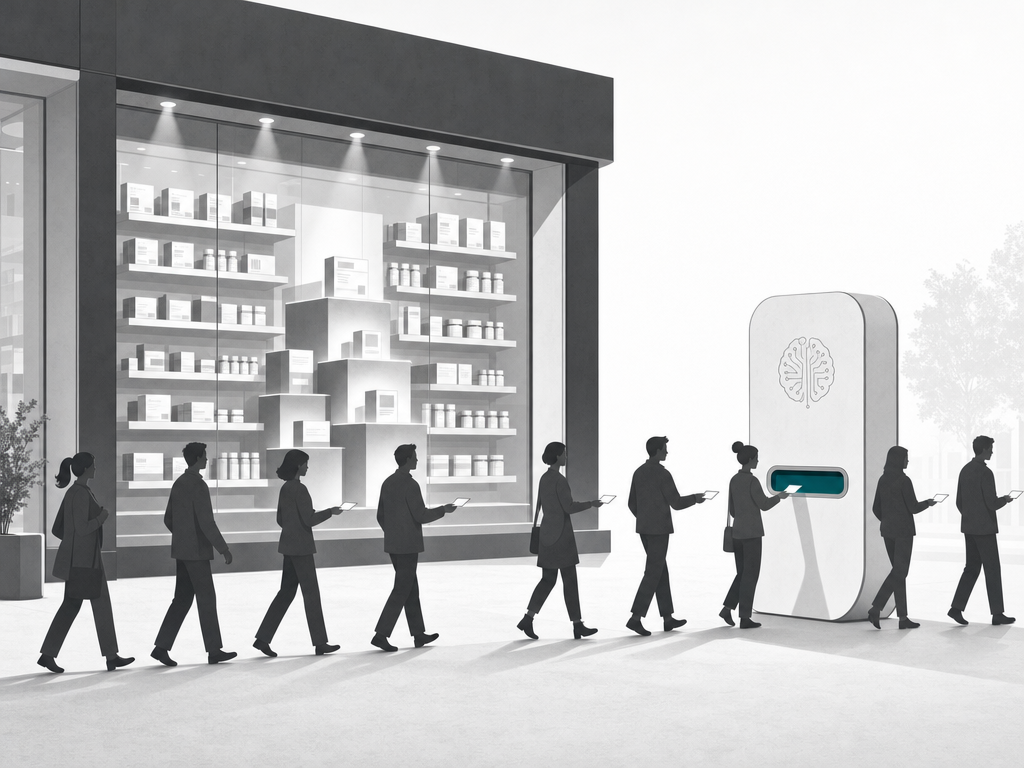
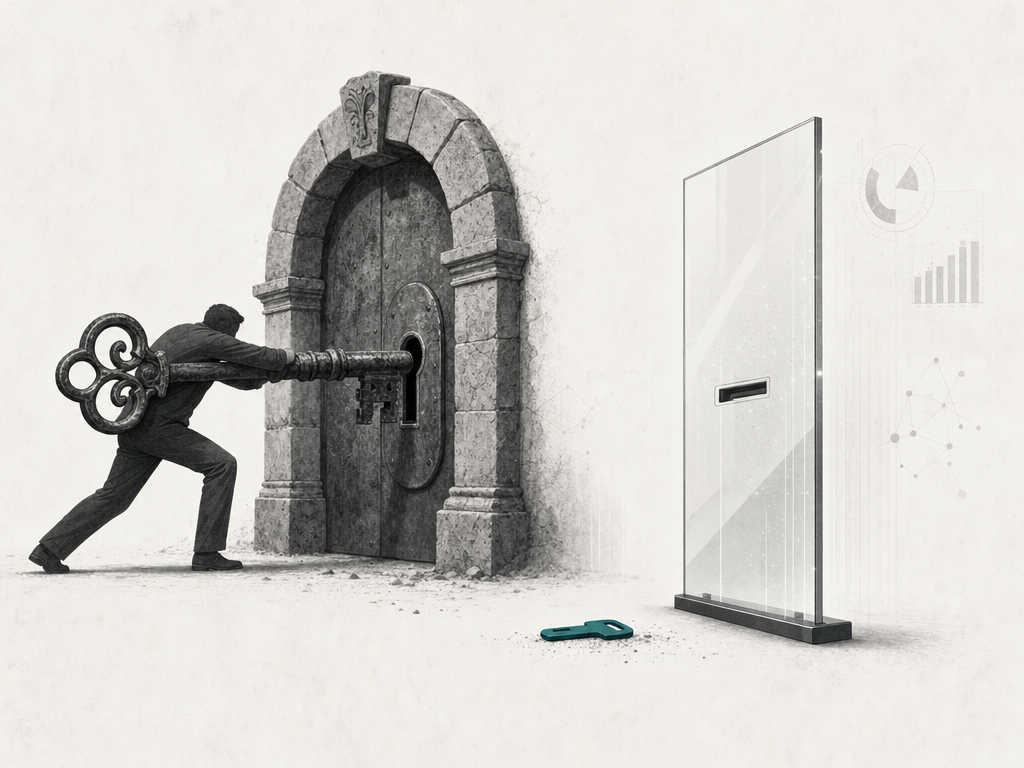
The silent screening happens when a buyer asks an AI assistant for supplier options before creating an RFQ, filling a contact form, or replying to outreach. In that moment, your website, sales deck, trade-show booth, and technical team are not in the room. The answer is assembled from what the AI system can retrieve, summarize, and trust about your company.
In a conventional path, a procurement or sourcing team might start with Google, industry directories, conference contacts, internal vendor lists, and referrals. That path is still alive. This article is not arguing that SEO is dead. The problem is that the buyer now has another path that can happen earlier, faster, and without leaving a visible signal for your CRM.
For an API manufacturer, the question might start before a molecule-specific inquiry. For a CDMO, it may happen before a capability matrix is requested. For an excipient supplier, nutraceutical brand partner, or oral care manufacturer, it may happen while the buyer is defining what category of supplier should even be considered.
That is why absence in an AI answer is not a vanity issue. It is a commercial blind spot. If the assistant gives three supplier names, compares two capabilities, or frames your category without naming you, the buyer's mental shortlist can be shaped before your team knows a search happened.
AEO Dose tests this surface across ChatGPT, Gemini, Perplexity, Claude, and Grok using buyer questions organized by journey stage. That testing does not claim to measure every buyer action. It measures what the assistants say when asked the kinds of questions pharma buyers can ask before direct contact.
What a pharma buyer actually asks an AI assistant
A pharma buyer asks an AI assistant practical supplier-research questions that combine category, capability, geography, compliance context, and comparison. These are not just keyword searches rewritten as prompts. They are working questions a sourcing, procurement, technical, or BD stakeholder could use to reduce uncertainty before speaking with vendors.
Examples include:
- "Which API manufacturers supply regulated markets for this type of molecule?"
- "Compare CDMOs with oral solid dosage capability and experience in scale-up."
- "Which excipient suppliers are suitable for nutraceutical formulations targeting clean-label claims?"
- "What should I ask an oral care contract manufacturer before sending an RFQ?"
- "Which suppliers appear credible for small-batch development before commercial scale?"
The important detail is not the exact wording. The important detail is that the buyer can ask for interpretation, not only retrieval. Google can return pages. AI assistants can produce a first-pass comparison, explain a category, summarize perceived strengths, and identify questions to ask suppliers.
That changes the supplier's exposure. A company can have a technically accurate website and still be unclear in AI answers if the assistant cannot connect its capabilities, markets, certifications, entities, and evidence into a usable recommendation. A buyer may never ask, "Why was this supplier not included?" They may simply continue with the names the assistant surfaced.
AEO Dose's question construction is grounded in pharma operating reality, not generic AI-search commentary. Founder M Netrajit Singha's background as a B.Pharma graduate with 12+ years in Pharma ERP implementation and Computer System Validation informs how buyer questions are framed around regulated procurement, validation, documentation, and supplier qualification concerns.
Which stages of the pharma buyer journey have already shifted
The shift appears wherever a buyer can ask a useful question without revealing intent: discovery, evaluation, product/capability, commercial, and support. These five themes are the structural backbone AEO Dose uses to build supplier-research prompts because they reflect how a pharma buyer moves from uncertainty to action.
Discovery questions start with category formation. The buyer may not yet know whether they need an API manufacturer, a CDMO, a specialist excipient supplier, a formulation partner, or a finished-product manufacturer. AI assistants are useful here because they explain supplier categories and suggest names that fit the category description.
Evaluation questions compare supplier credibility. The buyer may ask which companies appear suitable for regulated markets, which have visible experience in a segment, or how two supplier types differ. This is where missing evidence becomes expensive. If your company is described vaguely, the assistant may not have enough substance to present you as a serious option.
Product/capability questions test technical fit. These questions involve dosage forms, manufacturing processes, analytical capabilities, packaging formats, formulation types, batch sizes, supply chain scope, or therapeutic area context. The answer depends on whether your public information makes those capabilities clear enough to be extracted and connected.
Commercial questions come next when the buyer is trying to understand practical engagement. AI assistants may be asked what to prepare before contacting a supplier, what factors affect pricing, what questions to include in an RFQ, or what commercial risks to evaluate. This does not replace negotiation. It shapes the buyer's preparation before negotiation begins.
Support questions address what happens after initial contact or selection. Buyers may ask about documentation expectations, technical support, quality agreements, regulatory support, change control, or onboarding questions. If your support model is invisible or generic, the AI answer may describe the category without giving your company credit for relevant strengths.
The point is not that every buyer journey is identical. The point is that each theme can now begin in an AI assistant before the supplier sees intent. That is the behavior shift pharma marketing and BD teams need to account for.
Why this is different from a buyer using Google
This is different from Google because AI assistants compress research into an answer instead of sending the buyer to a list of pages. With Google, the buyer sees titles, snippets, ads, directories, and supplier websites. The supplier has more opportunities to win the click, control the page experience, and capture inquiry intent.
With an AI assistant, the first output may be a recommendation list, a comparison table, a supplier category explanation, or a set of questions to ask vendors. The buyer may accept that framing without visiting every named company's website. The supplier's content still matters, but it is no longer judged only by whether it ranks and gets clicked. It is also judged by whether it can be interpreted and used inside an answer.
This creates two practical differences.
First, AI answers can cite or summarize sources without giving the supplier a direct lead signal. A buyer may learn about your competitor, compare them with your category, and continue researching without triggering a website session your analytics team can see.
Second, AI assistants can make omissions feel natural. In Google, absence from page one is visible if someone searches carefully. In an AI answer, absence is quieter. The assistant simply names other suppliers or describes the category in a way that leaves you out.
That is why treating AI visibility as "SEO with a new label" is misallocated effort. SEO remains relevant, but AI visibility asks a different question: when a buyer asks an assistant to recommend, compare, or explain suppliers, does your company appear accurately enough to stay in consideration?
The five platforms that matter and why one is not enough
One AI platform is not enough because ChatGPT, Gemini, Perplexity, Claude, and Grok can produce different supplier answers from the same buyer intent. A supplier visible in one assistant can be absent, misclassified, or weakly described in another.
AEO Dose tests across all five because pharma buyers do not operate inside a single controlled interface. One stakeholder may use ChatGPT for a broad category explanation. Another may use Perplexity because it surfaces citations. A technical colleague may ask Claude to summarize supplier documentation or compare capability language. A commercial stakeholder may use Gemini inside a broader research workflow. Another user may test Grok for a fast market scan.
This is not a ranking of platforms. It is a testing surface. Each assistant has its own retrieval behavior, answer style, citation pattern, and tolerance for ambiguity. If your AI visibility assessment only checks one platform, it can produce a false sense of security.
The same applies to prompt design. Asking "Who are the best CDMOs?" is too blunt to represent how regulated procurement works. A pharma buyer's actual question may include dosage form, geography, audit expectations, development phase, documentation needs, or commercial scale. The assistant's answer can change when those details change.
A useful visibility test therefore needs two dimensions: platform coverage and journey-stage coverage. Platform coverage prevents overreading one assistant. Journey-stage coverage prevents testing only generic discovery questions while missing evaluation, product/capability, commercial, and support prompts.
What suppliers who are missing from AI answers tend to have in common
Suppliers missing from AI answers tend to have public information that is too vague, fragmented, inconsistent, or unsupported for an assistant to use confidently. This is not about adding AI buzzwords to a homepage. It is about whether a machine-generated answer can understand who you are, what you supply, where you fit, and why a regulated buyer should consider you.
The patterns are familiar in pharma and healthcare supplier marketing.
Some companies describe themselves in broad claims: "global quality partner," "innovation-led manufacturer," or "trusted supplier to regulated industries." Those phrases do not tell an assistant which capabilities belong to the company.
Some companies bury useful information in PDFs, brochures, trade-show decks, or disconnected product pages. The evidence exists, but it is not easy to assemble into a clean supplier profile.
Some companies use inconsistent entity signals. The corporate name, facility name, product brand, legacy name, and LinkedIn presence do not line up cleanly. That makes it harder for an assistant to connect evidence across sources.
Some companies have capability pages that read like sales language rather than procurement evidence. A buyer asks about dosage forms, compliance context, documentation, markets served, or support model. The page answers with generic positioning.
Some companies are present in search but weak in comparison contexts. They can be found if someone knows the name, but they do not appear when a buyer asks for suppliers in a category. That is the difference between being findable by name and being recommended by need.
The fix is not to chase guaranteed AI rankings. There are no responsible guarantees here. The first task is diagnosis: what do the assistants currently say, where are you absent, and which information gaps explain the answer?
Where to start if you suspect you are not in the conversation
Start by testing the questions a real buyer would ask before they contact you, not by asking an AI assistant to summarize your homepage. A homepage summary is a weak proxy for supplier visibility. It tells you whether the assistant can read your owned message. It does not tell you whether you appear when the buyer does not already know your name.
Build a small question set across the five journey themes:
- Discovery: "Which suppliers fit this category?"
- Evaluation: "How do these supplier types compare?"
- Product/capability: "Who can support this manufacturing or formulation need?"
- Commercial: "What should I prepare before requesting a quote?"
- Support: "What supplier support questions should I ask before selection?"
Then run those questions across ChatGPT, Gemini, Perplexity, Claude, and Grok. Record whether your company appears, how it is described, what competitors or alternatives are named, whether citations appear, and whether the answer includes errors. Do not treat one answer as truth. Treat the pattern across platforms and journey themes as the diagnostic surface.
If your company is absent or misrepresented, resist the urge to buy scattered tactics immediately. More schema, more blog posts, or more AI-written pages may be wasted budget if the real issue is unclear capability evidence, inconsistent entity information, thin third-party validation, or missing buyer-stage content.
The practical next step this week is simple: check whether AI assistants can see and describe your company the way a pharma buyer would need them to.
Get Your Free AI Visibility Check
Start my free check