Oral care brands need an AI visibility strategy separate from SEO because an SEO-only program leaves measurable buyer discovery traffic unaddressed. AI assistants synthesize answers without sending the buyer to a results page, so SEO rankings never get a chance to win. AEO Dose measures this gap across ChatGPT, Gemini, Perplexity, Claude and Grok using five buyer journey themes. This article explains the gap and where to start.
- The concrete scenario where strong SEO never gets a chance to win
- What AI visibility measures and why SEO metrics do not capture it
- Which buyer types are routing oral care questions through AI assistants
- What a missing brand actually costs when the answer gets synthesized without you
- The signals AI assistants weigh when deciding who gets cited
- A starting framework to measure your own AI visibility gap
- The first move to make this quarter
The scenario SEO cannot win: a dentist asking Perplexity for a toothpaste recommendation
Picture a dentist typing into Perplexity: "What toothpaste should I recommend for patients with dentin hypersensitivity, and which brands have clinical backing?" The assistant returns a synthesized paragraph naming a short list of brands with a brief rationale for each. The dentist reads it, forms a shortlist, and moves on. No search results page ever loaded. No blue links were clicked.
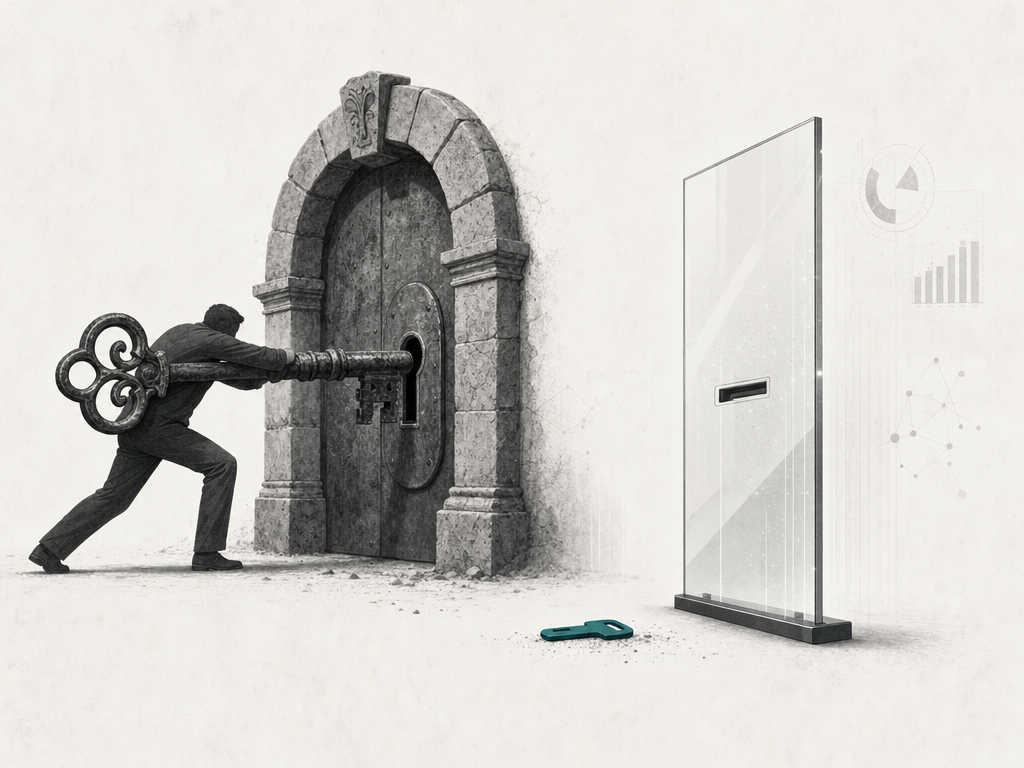
Your SEO team may have earned the top organic position for "best toothpaste for sensitive teeth." That ranking did nothing here. The buyer never saw it because the assistant answered the question directly. This is the core of the gap: SEO wins the results page, and in this interaction there was no results page to win. The same pattern plays out when a parent asks ChatGPT for a kids' fluoride toothpaste, when a retail buyer asks Gemini to compare private label oral care suppliers, or when a distributor asks Claude which manufacturers hold the relevant certifications.
What AI visibility actually measures (and why SEO metrics miss it)
AI visibility measures whether an AI assistant names, recommends, or cites your brand when a buyer asks a relevant question, and SEO metrics do not capture this because they measure a different surface entirely. SEO tracks rankings, impressions, click-through rate, and organic sessions. Every one of those metrics assumes the buyer lands on a search results page and then decides where to click. AI visibility assumes the opposite: the assistant answers, and the brand named in that answer wins the mental shortlist.
These are parallel disciplines, not a replacement. SEO still matters for the buyers who search the traditional way, and defunding it would be a mistake. But a brand that reports only on SEO health has no instrument pointed at the AI answer surface. AEO Dose measures visibility across ChatGPT, Gemini, Perplexity, Claude and Grok, and across five buyer journey themes: discovery, evaluation, product and capability, commercial, and support. That structure exists because a brand can be visible in one platform and absent in another, or strong at the discovery stage and invisible when a buyer asks a detailed capability question. A single number hides those differences. The measurement surface is platform-by-platform and theme-by-theme.
Who is asking AI assistants about oral care brands
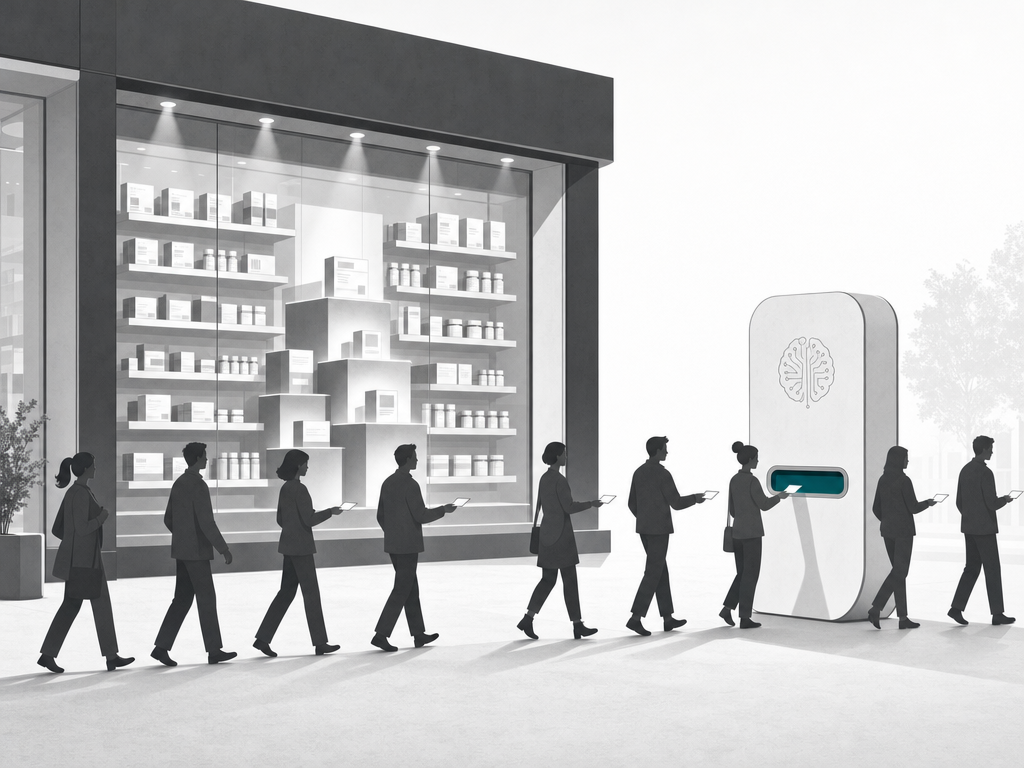
The buyers asking AI assistants about oral care span the full chain, from the consumer at the shelf to the dentist, the retail buyer, and the distributor. Each of them arrives with a different question shape, which is why the five buyer journey themes matter as a measurement frame rather than an abstract funnel.
A consumer asks discovery questions: which natural toothpaste brands avoid certain ingredients, what works for whitening without sensitivity. A dentist or dental hygienist asks evaluation questions grounded in clinical rationale. A retail or e-commerce buyer asks product and capability questions about formulations, pack sizes, and compliance. A procurement lead at a private label program asks commercial questions about contract manufacturing capacity and certifications. And once a relationship starts, support questions follow about documentation and lead times. If your brand only surfaces for some of these themes, you have a partial presence that looks fine until a buyer asks the question where you are absent.
What happens when your oral care brand is missing from the answer
When your brand is missing from the AI answer, the buyer builds a shortlist from the brands that were named, and your absence is silent. There is no bounce metric, no lost-session alert, no ranking drop to investigate. The assistant simply recommended someone else, and you never saw the interaction happen. This is what makes the gap dangerous: it does not show up in any dashboard an SEO-only team already watches.
Being missing is not the only failure mode. A brand can be cited in an answer without a link, which means the buyer hears your name but has no path back to your site. A brand can also be described inaccurately, with the assistant pulling an outdated claim or a competitor's framing. For oral care specifically, where buyers care about clinical backing, ingredient claims, and certifications, an inaccurate synthesis can push a qualified buyer toward a brand whose information was clearer and better structured. The buyer is not evaluating who is best. They are evaluating who the assistant could describe confidently.
The signals AI assistants use to decide who gets cited
AI assistants decide who to cite based on how clearly and consistently a brand's information is structured, corroborated across sources, and matched to the specific question being asked. When a buyer asks about sensitivity relief, the assistant favors brands whose content explicitly connects the product to that use case, states the active ingredient, and is reinforced by independent mentions. Vague marketing copy that an SEO program rewarded for keyword coverage does not give an assistant the structured, answerable facts it needs.
This is where consumer health and oral care brands have patterns worth examining in detail, and the Industry-Specific Visibility Challenges cluster goes deeper into how oral care brands surface across consumer and dental buyer queries and why a brand might be cited without a link. The short version: assistants reward clarity, specificity, and corroboration. They cannot reward signals a brand never published in a form they can parse.
How to measure the gap: a starting framework for oral care marketing teams
You measure the gap by asking the AI assistants the same questions your buyers ask, then recording whether your brand appears, how it is described, and whether the description is accurate. That is the entire baseline. You are not optimizing yet. You are establishing whether you are visible, invisible, or misrepresented across platforms and themes.
A structured starting point mirrors how AEO Dose runs its measurement. The Audit and Optimization Process cluster explains the full cycle, but the entry point is straightforward: AEO Dose's Free AI Visibility Check runs 10 buyer-style questions across 2 platforms, while the Full AEO Readiness Audit covers all five platforms (ChatGPT, Gemini, Perplexity, Claude and Grok). The method matters here. AEO Dose's framework was built by founder M Netrajit Singha, whose background in B.Pharma, 12-plus years of Pharma ERP implementation, and Computer System Validation shapes an audit discipline that applies to consumer health and oral care brands, not only API manufacturers and CDMOs. The baseline gives you a defensible before-picture: which questions, which platforms, which themes, and what the assistant actually said.
Where to begin this quarter
Begin this quarter by running a measurement baseline before you change a single piece of content. In 2026, AI visibility belongs as a line item in the oral care marketing plan alongside SEO and social, and the first dollar of that line item should buy measurement, not tactics. You cannot fix a gap you have not measured, and you cannot defend a budget for AI visibility work without a before-picture.
Write down the ten questions your real buyers ask: the consumer discovery questions, the dentist evaluation questions, the retail and private label commercial questions. Run them through two assistants yourself this week and record what comes back. Then formalize it. If you want a structured baseline across platforms and buyer journey themes without building the framework from scratch, Get Your Free AI Visibility Check. Treat it as a measurement starting point. The point is to see the gap clearly before you decide what, if anything, to do about it.
Frequently asked questions
How is AI visibility different from SEO for a consumer oral care brand?
SEO measures where your brand ranks on a search results page and how many people click through. AI visibility measures whether an AI assistant names or recommends your brand when a buyer asks a question directly. The difference is the click. When an assistant synthesizes an answer, no results page loads, so your SEO ranking never gets shown. They are parallel disciplines. A brand needs both because different buyers use different surfaces to reach the same decision.
Who is asking AI assistants about oral care products and manufacturers?
The full buyer chain asks. Consumers ask discovery questions about whitening, sensitivity, or natural ingredients. Dentists and hygienists ask evaluation questions grounded in clinical rationale. Retail and e-commerce buyers ask product and capability questions about formulations and compliance. Private label procurement leads ask commercial questions about contract manufacturing capacity and certifications. Each buyer type asks a differently shaped question, which is why AI visibility is measured across five buyer journey themes rather than as a single score.
What happens when an oral care brand is missing from AI answers?
The buyer builds a shortlist from the brands the assistant did name, and your absence is silent. No bounce metric fires, no ranking drops, no dashboard flags the lost interaction. You simply were not recommended, and you never saw it happen. A brand can also be cited without a link, giving the buyer your name but no path back, or described inaccurately, pushing a qualified buyer toward a competitor whose information was structured more clearly.
What signals do AI assistants use to recommend oral care brands?
Assistants favor brands whose information is clearly structured, corroborated across independent sources, and matched to the specific question. For an oral care query about sensitivity, the assistant rewards content that names the use case, states the active ingredient, and is reinforced by outside mentions. Vague marketing copy that performed well for keyword coverage does not give an assistant the answerable facts it needs. Clarity, specificity, and corroboration are what get a brand cited.
How do you start measuring AI visibility for an oral care brand?
Ask the AI assistants the same questions your buyers ask, then record whether your brand appears, how it is described, and whether that description is accurate. Start with the ten real questions your consumers, dentists, and retail buyers ask. Run them through two assistants and log the results. AEO Dose's Free AI Visibility Check runs 10 questions across 2 platforms as an entry point, and the Full AEO Readiness Audit covers all five platforms. The goal is a baseline, not optimization.
Why does strong Google ranking not guarantee an AI citation?
Because they are measured on different surfaces. A Google ranking determines where you appear on a results page a buyer may never load. An AI citation depends on whether the assistant can confidently pull structured, answerable facts about your brand and corroborate them. Keyword-optimized copy that ranks well can still be too vague for an assistant to cite. Ranking proves you are findable by searchers; citation proves you are usable by an answer engine. Winning one does not deliver the other.