Opening: a buyer asks ChatGPT for an oral care recommendation
A buyer types "fluoride-free toothpaste for sensitive gums, SLS-free" into ChatGPT. This is an attribute-extraction problem, not an SEO problem: oral care brands should include structured ingredient lists, use-case descriptions, certifications, manufacturing details, and third-party endorsements in a format AI engines can extract. If those facts live inside banner images or buried PDFs, the assistant names a competitor whose page states them in plain text.
What you'll learn
- Why strong search rankings do not carry over to AI recommendations
- The specific product attributes AI engines pull from a page
- How to structure ingredient and formulation data for clean extraction
- What certifications and dentist endorsements do for AI citations
- Why marketing images and PDFs are a visibility dead-end
- What an AI-readable oral care product page looks like in practice
- Where to start auditing your current product pages
Why strong SEO does not translate to AI recommendations for oral care
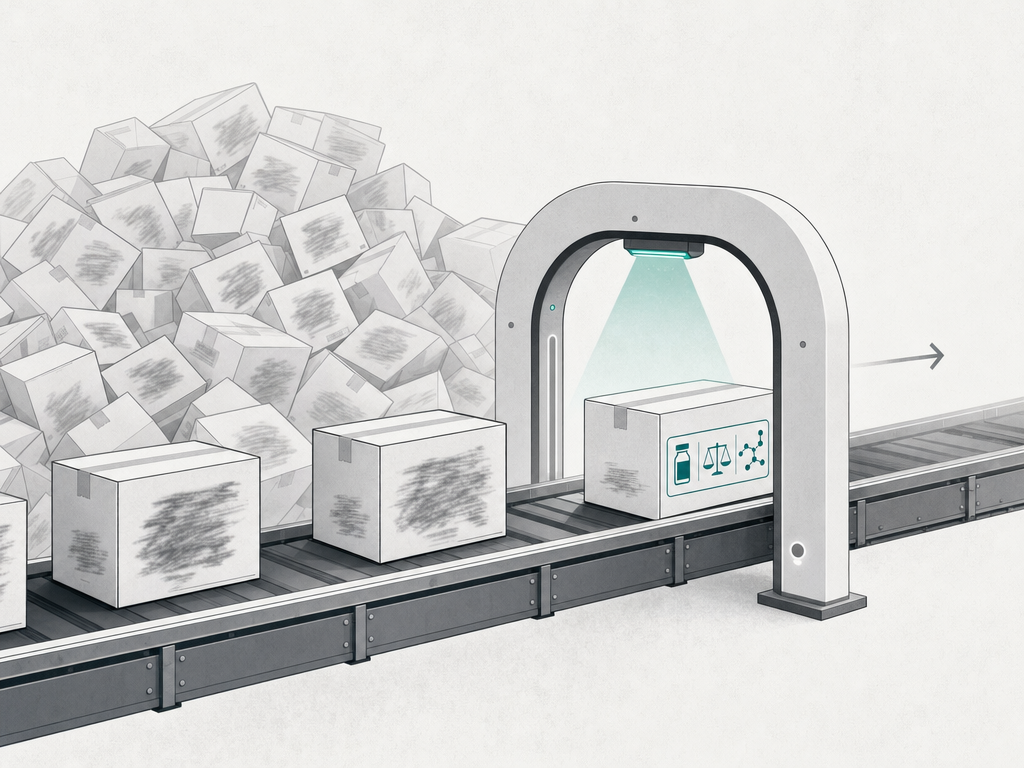
Strong SEO ranks a page; it does not guarantee an AI assistant can describe what the product does. Traditional search sends a buyer to your page and lets them read it with human eyes. An AI assistant reads the page itself, extracts specific facts, and reassembles them into a recommendation without the buyer ever visiting. These are two different jobs, and a page tuned for the first can fail the second completely.
Here is the pushback oral care marketers need to hear: brand strength alone does not drive AI recommendations. A well-known name with a page full of lifestyle photography and a short tagline gives an assistant almost nothing to extract. A smaller brand that lists its active ingredients, intended uses, and certifications in plain, readable text gives the assistant a complete answer. When the buyer asks for "a whitening toothpaste without peroxide for enamel-safe daily use," the assistant quotes the page that states those facts clearly.
This distinction between ranking and extraction is the core of AI visibility, and it is worth understanding on its own terms. Our guide to answer engine optimization fundamentals walks through why AEO is a separate discipline from the SEO most oral care teams already run.
The product attributes AI engines extract
AI engines extract specific, factual attributes from a product page: the ingredient list, the intended use case, certifications, and manufacturing context. In 2025, as more buyers open ChatGPT, Gemini, Perplexity, Claude, or Grok before a search box, those assistants need discrete facts they can lift and restate, not persuasive copy they have to interpret.
The AEO Dose audit methodology tests buyer questions across five AI platforms and five journey themes, including product and capability queries. The product questions assistants receive are attribute-specific: active ingredients, what the product treats, who it is for, how it is certified, and where it is made. Each of these is an attribute an oral care page either states plainly or hides:
- Ingredients and formulation. Active and inactive ingredients, concentrations where relevant, and what each is for.
- Use case. Sensitive gums, whitening, kids, fluoride-free, enamel repair, daily use versus treatment.
- Certifications and endorsements. Dentist associations, cruelty-free marks, third-party testing, regulatory status.
- Manufacturing details. Where the product is made, under what standards, and by whom.
None of these attributes outranks the others. Which one closes the gap depends entirely on the question the buyer asks. A fluoride-free query turns on the ingredient list; a "made in" query turns on manufacturing context. Treat them as members of one extractable set, not a ranked checklist.
How ingredient and formulation information should be structured
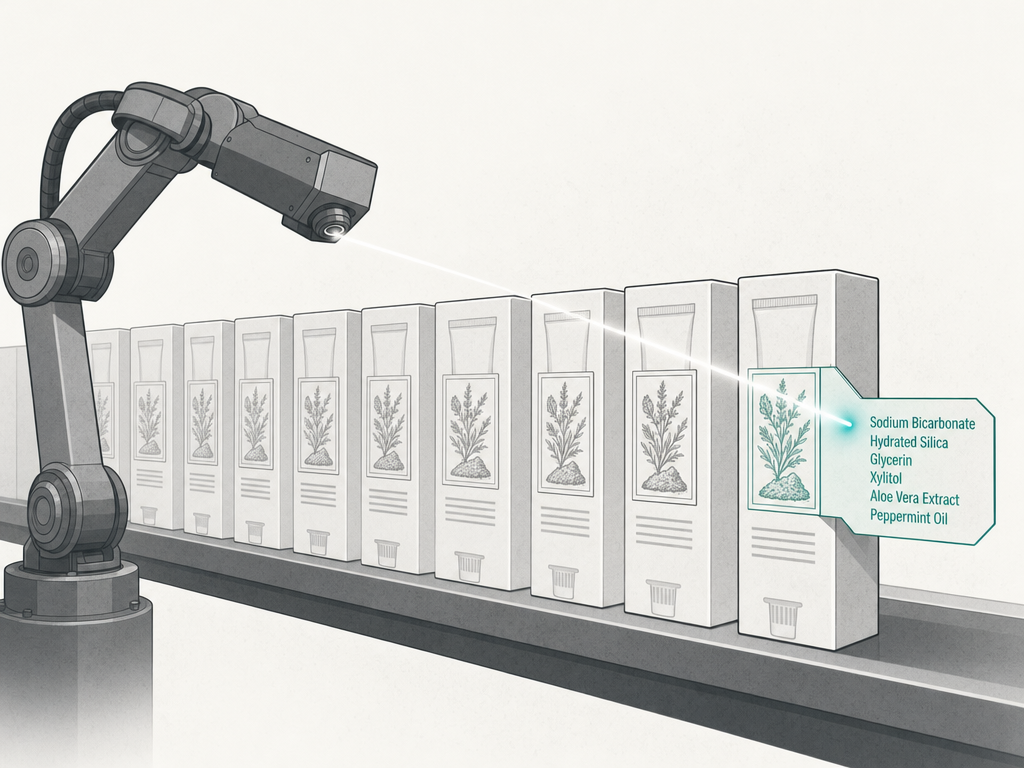
Ingredient information should sit in plain, machine-readable text, ideally paired with structured data, so an AI engine can extract it without guessing. When an ingredient list is baked into a product image or a downloadable spec sheet, the assistant sees a graphic, not a list of sodium fluoride, hydrated silica, and xylitol. The facts are on the page, but not in a form the engine can read.
Two things fix this. First, write the ingredient list as actual text on the page, labeled clearly, with each ingredient and its purpose where that adds clarity. Second, mark it up with structured data. The Schema.org Product vocabulary gives standardized properties for product attributes, and AI engines use these vocabularies to interpret what a page is describing. When your fluoride concentration, intended use, and ingredient details are expressed in both plain text and structured markup, you remove the interpretation step entirely.
The mechanism is simple. When ingredients are structured as plain text and schema, the engine extracts them directly. In the absence of that structure, when the data lives only in an image, the engine has nothing to quote and moves to the next brand that made its formulation legible.
The role of certifications, dentist endorsements, and third-party testing
Certifications, dentist endorsements, and third-party testing act as the trust signals AI engines cite when a buyer asks for a product that is proven or professionally backed. When someone asks for "a dentist-recommended mouthwash" or "clinically tested whitening strips," the assistant looks for an explicit, named endorsement or certification on the page. A vague claim of "trusted by professionals" gives it nothing specific to repeat.
State these details concretely: the name of the certifying body, the association that recommends the product, the lab or study that tested it. When a certification is named and legible in text, it becomes an extractable fact that satisfies the buyer's exact query. When it exists only as a logo in a footer image, the engine registers a graphic and cannot confirm the claim. The condition for impact is specificity and readability, not the presence of a badge somewhere on the page.
Why marketing images and PDFs are a visibility dead-end
Marketing images and downloadable PDFs are a visibility dead-end because the product facts inside them are not reliably readable by AI engines. Most oral care product pages are built for human conversion, and for a human, a beautifully designed ingredient graphic or a polished spec-sheet PDF works fine. The eye reads it. An AI assistant parsing the page for a recommendation does not get the same access.
When your ingredient list, usage instructions, and certifications live only inside a JPG or a PDF attachment, you have effectively hidden those attributes from the exact systems now shaping buyer recommendations. The information is present but unextractable. The fix is not to delete the images; it is to mirror every fact they contain in plain on-page text. The image can stay for the human; the text serves the engine.
What an AI-readable oral care product page looks like in practice
An AI-readable oral care product page states every key attribute in plain text, labels it clearly, and backs it with structured data. Compare two pages for the same whitening toothpaste.
The conversion-only page leads with a hero image, a one-line tagline, a buy button, and an ingredient panel rendered as a graphic. A human buys from it easily. An assistant asked to compare whitening toothpastes finds a name and a price and little else to quote.
The AI-readable page carries the same design but adds a labeled ingredient list in text, an explicit use-case line ("formulated for daily enamel-safe whitening, peroxide-free"), named certifications and the dentist association behind them, a manufacturing note, and Product schema wrapping it all. When the assistant evaluates the query, this page supplies a complete, quotable answer. Same product, same brand, radically different extractability.
Where to start: auditing current product pages
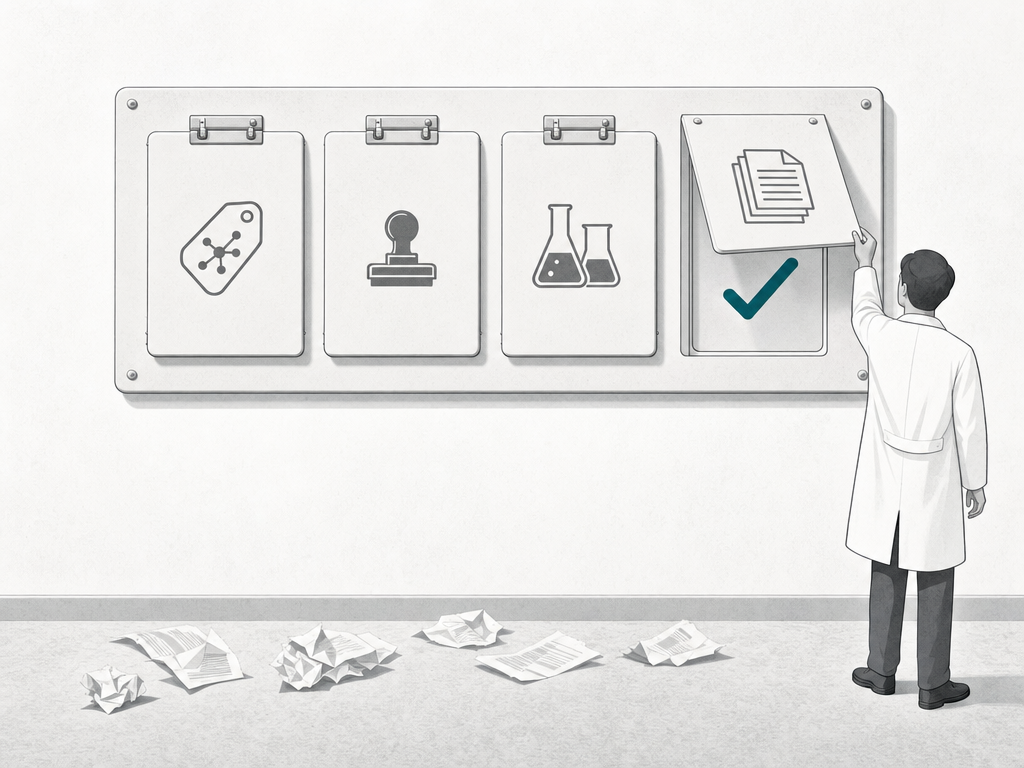
Start this week by opening one product page and auditing it against the attribute set: ingredients, use case, certifications, manufacturing details, and endorsements. For each attribute, ask one question. Is this fact present as plain, readable text, or is it trapped in an image or PDF? Write down every attribute that fails the test. That list is your extraction backlog, and it tells you exactly what an AI assistant cannot currently read about your product.
Once you have audited one page by hand, you will want to see how your pages perform against live buyer questions across the assistants your customers actually use. Our audit and optimization process overview explains how the Free Check and Full Audit test product and capability queries across all five platforms.
Get Your Free AI Visibility Check
Get Free AI Check