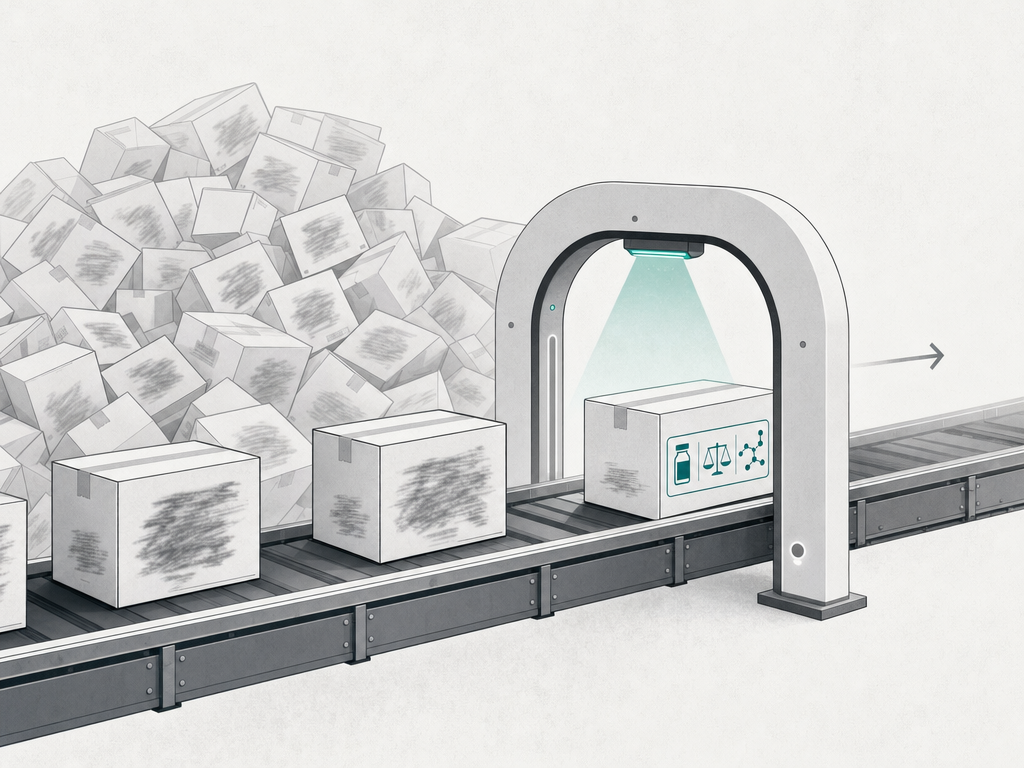
CDMOs get skipped by AI assistants because their capability pages use vague marketing language AI systems cannot parse into specific formats, scales, therapeutic categories, or certifications. AEO Dose has observed this pattern across audits on ChatGPT, Gemini, Perplexity, Claude, and Grok. When a sponsor types "recommend a sterile fill-finish CDMO for a lyophilized biologic at clinical scale," unparseable pages never surface, and legible competitors do.
What you'll learn
- The questions sponsors actually type into AI assistants when shortlisting manufacturing partners
- Why marketing-brochure capability language makes a CDMO unreadable to AI systems
- The concrete dimensions your pages should name instead of describing abstractly
- When your discretion about clients quietly costs you visibility
- How to see which other CDMOs AI assistants recommend in your place
- A check your marketing lead can run before the end of the week
What sponsors actually ask AI assistants when shortlisting CDMOs
Sponsors ask AI assistants narrow, format-specific questions long before they issue an RFP. The question is almost never "list contract manufacturers." It is closer to "which CDMOs handle high-potency oral solid dose at commercial scale with a US and EU GMP footprint," or "recommend a fill-finish partner for a prefilled syringe program in oncology." Most sponsors begin shortlisting with exactly this kind of constrained query, and they are now using AI assistants to pre-screen before a human ever reviews a longlist.
At AEO Dose we test CDMO sites against five buyer journey themes: discovery, evaluation, product and capability, commercial, and support. Shortlisting questions cluster in discovery and product/capability. A sponsor in discovery wants to know who even does the thing. A sponsor in product/capability wants to confirm the specifics match the molecule. If your site cannot answer those two themes in language an AI system can extract, you are filtered out before evaluation begins.
Why vague capability language makes CDMOs invisible to AI systems
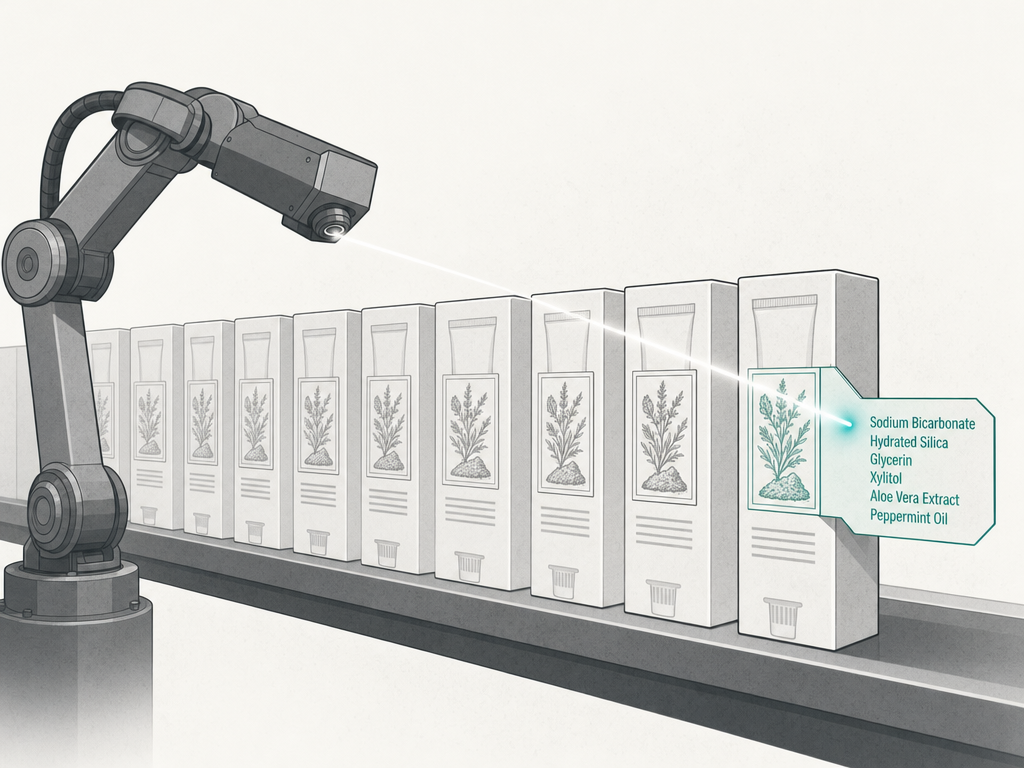
Vague capability language is invisible to AI systems because it gives them nothing specific to match against a sponsor's constrained query. "End-to-end solutions," "integrated development and manufacturing," and "flexible capacity to meet your needs" are common in CDMO copy. Most CDMO capability pages read like sales brochures. An AI assistant parsing that copy to answer "who runs lyophilization at clinical scale" finds no lyophilization, no scale, and no therapeutic anchor to cite.
AI assistants decide which CDMOs to cite by matching the entities, attributes, and conditions in the sponsor's question against text they can confidently attribute to a named company. When your page says "we handle a wide range of dosage forms," the system has no entity to attach to the query. When your page says "oral solid dose, including immediate-release and modified-release tablets and capsules, at scales from pilot batches to commercial-volume runs," the system has specific attributes it can surface. For readers who want the mechanics of how answer engines extract and attribute text to a named supplier before continuing, our fundamentals on AI answer engine optimization cover the groundwork.
The specific dimensions CDMO pages should name (formats, scales, therapeutic categories, certifications)
CDMO pages should name four concrete dimensions so AI systems can parse and cite them: formats, scales, therapeutic categories, and certifications. Each dimension answers a different part of a sponsor's constrained query, and each has its own mechanism for impact.
Formats. Name the dosage forms and delivery systems you actually run: sterile fill-finish, lyophilization, prefilled syringes, oral solid dose, softgels, sachets, topical semisolids, biologics drug product. When a sponsor asks about a specific format, the system matches it to the named format on your page. In the absence of a named format, there is nothing to match.
Scales. State the batch sizes and capacity ranges you support, from pilot and clinical through commercial. A sponsor querying "clinical scale" versus "commercial scale" gets routed to different suppliers. When scale information is omitted, your page cannot be routed to either query.
Therapeutic categories. Name the therapeutic areas you have run programs in, such as oncology, CNS, cardiovascular, or anti-infectives, at whatever level of specificity your confidentiality allows. When a sponsor asks for a CDMO with experience in a category, the AI system looks for that category named on a supplier page. When a site omits therapeutic categories entirely, it cannot surface for category-specific queries.
Certifications. List your GMP status, inspecting authorities, and relevant standards. Sponsors screen on regulatory footprint early. When certifications are stated plainly, the system can confirm the match; when they are implied rather than named, it cannot.
None of these dimensions outranks the others. Which one is costing you visibility depends entirely on the queries your target sponsors are running.
The discretion trade-off: when confidentiality costs visibility
CDMO discretion is a genuine reputation asset, but in AI search it also operates as a visibility tax, and the trade-off is worth naming plainly. The industry assumption is that saying less about clients and projects always protects you. That is not fully true anymore. When a site withholds therapeutic categories, program stages, and format specifics to protect confidentiality, it also withholds exactly the attributes AI assistants need to cite the company.
This is not an argument to disclose confidential client relationships or published commercial terms. Those stay private, and they should. The point is narrower: there is a large gap between naming a specific client and naming a capability. You can state "we run commercial-scale oncology oral solid dose programs" without naming a single sponsor. When we test CDMO sites, pages that disappear tend to be the ones that conflated capability discretion with client discretion and withheld both. The capability can be stated. The client stays confidential. Treat them as separate decisions.
How to see which CDMOs AI assistants recommend instead of yours
You can see which CDMOs AI assistants recommend in your place by running your target sponsor queries directly and reading the named suppliers in the answers. Open each of the five platforms, ask the constrained questions a sponsor would ask about your formats and scales, and record which companies get cited. You are not looking to copy any single competitor; you are looking at the structural pattern of which sites are legible enough to surface.
A manual pass tells you the shape of the problem. A structured audit tells you why. The AEO Dose Full Audit framework covers all five platforms with competitive benchmarking, led by founder M Netrajit Singha, a B.Pharma graduate with over twelve years in pharma ERP and computer system validation. It maps which other CDMOs AI assistants cite instead of yours across the five buyer journey themes, and attributes the gap to specific page-level causes. If you want the methodology behind that testing before committing, our overview of the audit and optimization cycle walks through what each stage covers.
A practical check a CDMO can run this week
This week, pick your three highest-value sponsor queries and run them yourself across all five AI assistants. Write down, in advance, the exact constrained questions a sponsor would type about your core formats and scales. For a sterile fill-finish house, that might be "recommend a CDMO for lyophilized vial filling at clinical scale with EU and US GMP." Run each query on ChatGPT, Gemini, Perplexity, Claude, and Grok.
Then record two things: whether your company appears, and which other CDMOs do. If you are absent, open your own capability page and check it against the four dimensions. Are formats named specifically? Are scales stated as numbers or ranges? Are therapeutic categories listed? Are certifications spelled out with inspecting authorities? Every "no" is a parsing gap the AI system hit. Fix the clearest gap first, then re-run the same three queries in a few weeks and compare.
If you would rather see the full picture across all five platforms with competitor benchmarking attached, Get Your Free AI Visibility Check.
See where your CDMO stands in AI supplier answers
Get a concrete baseline across the AI platforms your target sponsors use, with specific gaps and a prioritized action plan.
Get Your Free AI Visibility Check