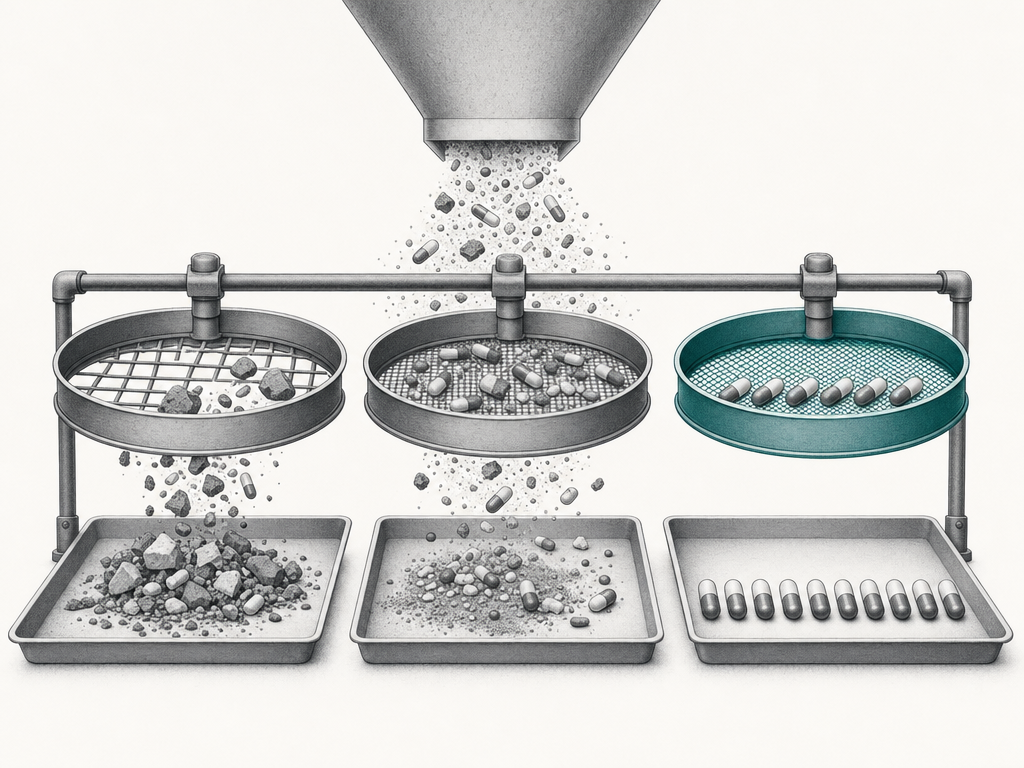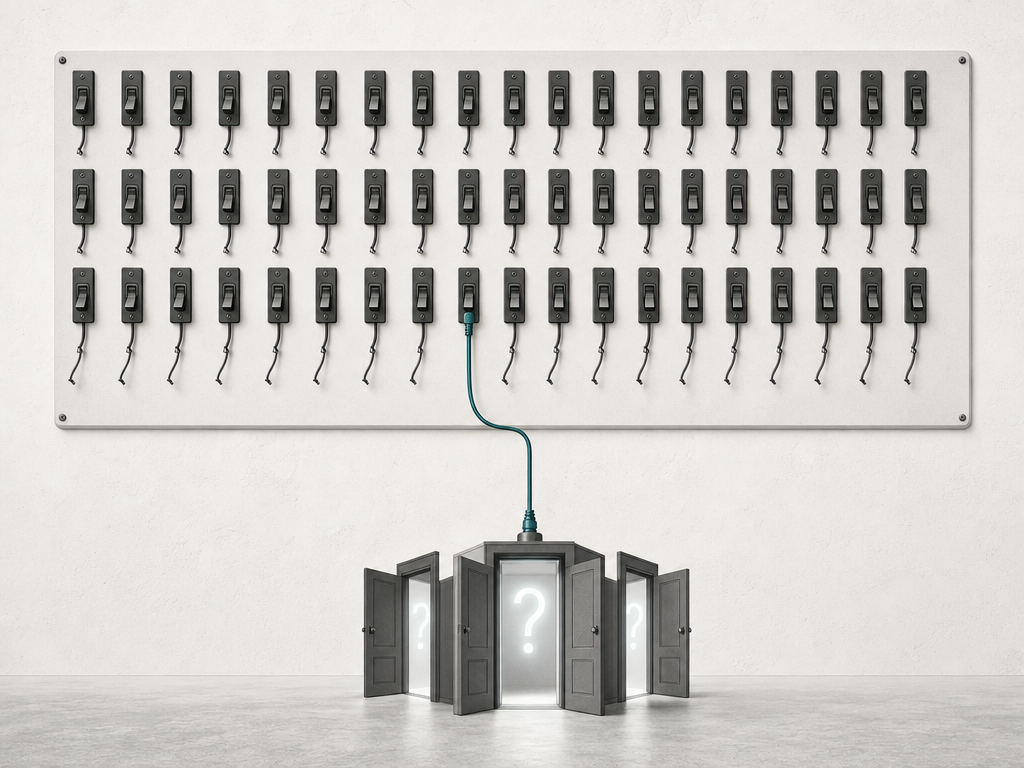
What differentiates AI visibility tools for pharma is realistic buyer journey testing, right-platform coverage, and specific findings, not raw platform count or mention volume. AEO Dose tests 5 platforms using buyer-journey questions across five themes: discovery, evaluation, product/capability, commercial, and support. In 12+ years of pharma ERP and Computer System Validation work, I watched procurement teams research suppliers nothing like consumers do, and that difference is what the right tool must respect.
Disclosure: this article is written by the founder of AEO Dose, and the framework described here is informed by how AEO Dose runs its own AI visibility audits. The methodology is shared openly so pharma businesses can evaluate any provider against it, including AEO Dose itself.Why pharma AI visibility is a different problem than consumer brand tracking
Pharma buyer research is structurally different from consumer research, and that difference is where generic tools fall short. In 12+ years inside pharma ERP implementations and Computer System Validation projects, I saw how an API buyer qualifies a supplier: regulatory status, documentation, capacity, change control, audit history. A consumer picks toothpaste off emotional preference and a quick comparison. A CDMO sourcing decision runs through procurement, quality, and regulatory sign-off before anyone signs anything.
Most AI visibility tools are built for consumer brands. They are designed to answer "how often does my brand name come up" because that is the question that matters when you sell shampoo. That framing does not map onto excipient qualification or API procurement. A pharma buyer rarely types your brand name into ChatGPT. They ask who supplies a given excipient grade, which CDMOs handle sterile fill-finish, or which API manufacturer has a clean regulatory record. A tool that only counts your name in the output misses the questions your buyers actually ask.
What platform coverage actually means, and when more is not better
Platform coverage means which AI assistants a tool actually queries, and more platforms is not automatically a better tool. The current landscape in 2025 runs on five major assistants: ChatGPT, Gemini, Perplexity, Claude, and Grok. Coverage across these matters because a buyer evaluating your company does not use one assistant. A procurement lead might use ChatGPT, while a quality manager leans on Perplexity for cited sources.
Here is the honest pushback. A tool advertising a long list of platforms is not better than one that covers the assistants your buyers actually use. Platform count is a vanity number when the platforms do not reflect where your buyers research. What you want is coverage of the assistants your buyers use, tested on questions your buyers ask. A right-fit set of platforms queried with real buyer questions tells you more than a long list queried with generic prompts.
So when a provider leads with platform count, ask which platforms and why those. The useful answer names the assistants pharma buyers consult and explains the reasoning. The unhelpful answer treats the number itself as the selling point.
Buyer journey questions versus generic brand mention tracking
Buyer journey questions test how AI assistants respond to what your buyers actually ask, while brand mention tracking only counts how often your name appears. This is a defining difference between pharma-grounded tools and consumer tools. Most martech dashboards treat mentions as the headline metric. In the absence of buyer-journey question design, a mention count tells you your name surfaced somewhere, but not whether it surfaced when a buyer was choosing a supplier.
A buyer journey spans distinct stages. AEO Dose groups them into five themes: discovery, evaluation, product and capability, commercial, and support. A discovery question asks who supplies a certain category. An evaluation question compares suppliers on a specific capability. A product or capability question drills into whether you can do sterile manufacturing or supply a particular excipient grade. A commercial question touches minimum order quantities or lead times. A support question probes documentation and regulatory responsiveness.
When a tool tests only brand mentions, it cannot tell you that you are invisible at the evaluation stage even though your name appears at discovery. The Free Check at AEO Dose runs 10 real buyer-journey questions precisely so the finding reflects a buyer's path, not a name-counting exercise. When you understand how AI visibility audits work step by step for pharma businesses, the difference between a mention and a buyer-stage answer becomes obvious.
The role of competitive benchmarking in making findings actionable
Competitive benchmarking turns a visibility finding into an action because it tells you not just whether you appear, but who appears instead of you. A result that says "you were not recommended for sterile fill-finish" is a problem statement. A result that says "you were not recommended, and other suppliers were, with specific reasons cited" is a direction. The second gives you something to work on.
In pharma this matters because the buyer's shortlist is short and the switching cost is high. If an AI assistant consistently names other suppliers when a buyer asks about your capability, you need to know what signals those suppliers carry that you do not. Benchmarking exposes the gap: a competitor's documentation is more discoverable, their regulatory credentials are stated plainly, or their capability pages answer the exact question the buyer asked.
A tool without benchmarking leaves you guessing about why an answer went the way it did. A tool with benchmarking gives the finding a reference point, which is what makes it a decision rather than a data point.
What the output of a useful AI visibility tool should look like
A useful tool's output should be specific enough that you know what to change on Monday morning. A dashboard full of trend lines and sentiment scores is not that. The output you want names the question that was asked, the assistant that answered, whether your company appeared, who appeared instead, and the likely reason for the result.
Specificity is the test. "Your visibility score is 62" tells you nothing you can act on. "When asked which CDMOs handle sterile fill-finish, Perplexity named other suppliers and did not name you, citing capability pages those suppliers publish and you do not" tells you exactly what to build. Good output reads like a set of findings, each tied to a question and a fix, not a single aggregate number designed to look impressive.
The output should also fit the full improvement cycle rather than ending at diagnosis. AEO Dose runs an Audit, Optimize, Build Authority, Measure, Repeat cycle, which means the findings are structured to feed directly into work. If you want to see how to read an AI visibility report without a technical background, look for output that a quality or commercial lead can act on without needing a martech translator.
Questions to ask any provider before you commit
Before you commit to any AI visibility provider, put these questions to them and judge the answers against pharma reality. Use this as a buyer's checklist.
- Which AI assistants do you query, and why those specific ones for pharma buyers?
- Do you test realistic buyer journey questions, or do you count brand mentions? Show me a sample question set.
- Do your questions cover the stages of a pharma buying decision, from discovery through evaluation, capability, commercial, and support?
- Does your output tell me who appeared instead of me, and why?
- Is the output specific enough that my quality or commercial team knows what to change?
- Do you understand how a pharma buyer qualifies a supplier, or is this a consumer tool with a pharma label?
- What happens after the audit? Does the finding feed a cycle of work, or does it stop at a report?
A provider who answers these plainly is worth a conversation. A provider who redirects to platform count or a visibility score is selling you a consumer tool.
A note on how AEO Dose approaches this (with disclosure)
AEO Dose was built around exactly the criteria above, which is why the disclosure sits at the top of this article. The methodology tests 5 platforms (ChatGPT, Gemini, Perplexity, Claude, and Grok) using buyer-journey questions grouped into the five themes of discovery, evaluation, product and capability, commercial, and support. The Free Check runs 10 real buyer-journey questions so you see the framework applied to your own business rather than a generic score.
I share the framework openly because the point is not that you must choose AEO Dose. The point is that you should be able to evaluate any provider, including this one, against criteria that reflect how pharma buyers actually research suppliers. If a competing tool meets these criteria better for your situation, use it.
To see where you stand, run the check and read the findings for yourself: Get Your Free AI Visibility Check.