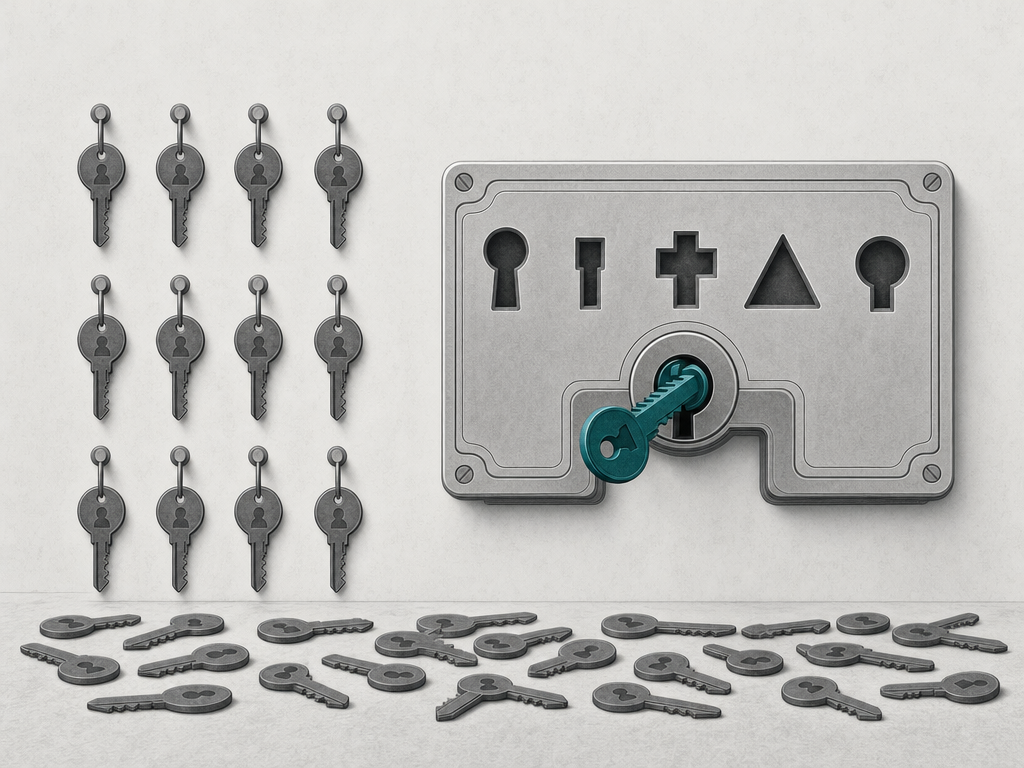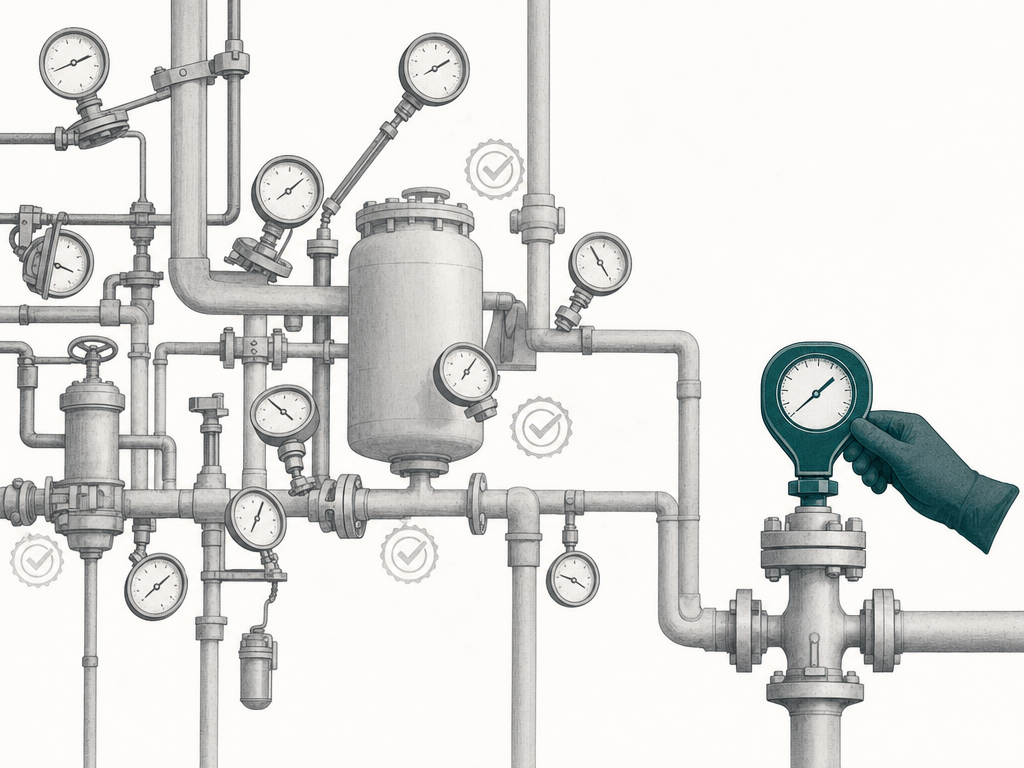
Yes, pharma-specific AI visibility tooling exists, but it is a narrow category. Most tools in the general market were not built around pharma buyer journeys. A pharma-fit tool must test visibility across ChatGPT, Gemini, Perplexity, Claude and Grok, using buyer questions relevant to API, CDMO, excipient, nutraceutical and oral care decisions.
What you'll learn
- Why pharma-specific AI visibility tooling is a narrow category
- Where generic AI visibility tools lose pharma buyer context
- Which five AI platforms belong in a current pharma visibility test
- What buyer journey themes a pharma-specific tool must cover
- What a pharma audit tests beyond generic brand mentions
- How to validate a tool before trusting its output
- What to check before buying or using an AI visibility service
The short answer: pharma-specific AI visibility tooling is a narrow category, and here is why that matters
Pharma-specific AI visibility tooling matters because pharma buyers ask technical, regulated, supplier-selection questions that generic brand tracking does not fully capture. An API buyer does not only ask, "Who are the best suppliers?" They may ask which manufacturers can support a GMP-grade intermediate, which CDMO has experience with a dosage form, or which excipient supplier fits a formulation constraint.
That changes the measurement problem. A simple brand-mention dashboard can show whether a company appears in an AI answer. It does not prove the assistant understood the company's category, capability, dosage-form relevance, market role, compliance vocabulary, or fit for the buyer's decision stage.
For pharma, the tool has to test the buyer scenario, not just the brand name. That means prompts for API manufacturers, CDMOs, excipient suppliers, nutraceutical brands and oral care manufacturers need different language. A CDMO query about sterile fill-finish is not the same as an oral care query about private-label toothpaste manufacturing. A nutraceutical buyer's question about contract manufacturing support is not the same as a formulation chemist's question about excipient functionality.
The falsifiable position is simple: if a tool does not test across the current five-platform landscape and does not use pharma buyer journey prompts, it is not giving a pharma company a reliable view of AI visibility. It may still be useful for general monitoring. It is not enough for supplier-selection visibility in this sector.
Why generic AI visibility tools miss what pharma buyers actually ask
Generic AI visibility tools miss pharma buyer intent when they treat all categories as the same brand-discovery problem. The pushback is simple: AI visibility is not just generic SEO with a new dashboard. Treating it that way is misallocated effort for a pharma business.
In pharma, the important question is not only whether an assistant mentions your company. The important question is whether the assistant cites or describes you correctly when a buyer asks a practical procurement, formulation, quality or capability question.
A generic tool may test prompts such as:
- "Best companies in this category"
- "Top suppliers for this product"
- "Compare Brand A and Brand B"
- "Where can I buy this?"
Those prompts can be useful in consumer markets and broad B2B categories. They are thin for pharma manufacturing and supply. A real buyer may ask:
- "Which API manufacturers supply GMP-grade material for regulated markets?"
- "Which CDMOs can support formulation development and commercial manufacturing?"
- "Which excipient suppliers support oral solid dosage formulation?"
- "Which nutraceutical contract manufacturers can handle capsules, tablets and powder formats?"
- "Which oral care manufacturers support private-label toothpaste or mouthwash?"
The vocabulary matters. API, GMP, CDMO, excipient functionality, formulation support, dossier expectations, quality documentation and commercial scale are not decorative terms. They shape whether the AI assistant can connect a company to the right buyer need.
A tool that cannot handle that language can produce a clean-looking report with weak commercial meaning. The report may say the brand is visible, but not whether it is visible for the questions buyers actually ask before shortlisting a supplier.
The five AI platforms pharma buyers are actually using
A current pharma AI visibility test should cover ChatGPT, Gemini, Perplexity, Claude and Grok because each assistant can produce different answer patterns, citations and supplier recommendations. In 2025-era buyer research, pharma teams are not relying on one search interface or one answer engine.
The point is not to rank these platforms. The point is to test whether your company is represented correctly across the assistants a buyer may use before they contact sales, procurement, technical service or business development.
ChatGPT is used for broad supplier discovery, comparison prompts and exploratory research. A buyer may ask it to explain supplier options, summarize capabilities or create a shortlist for further review.
Gemini sits close to the broader Google information environment. For a pharma company, this can expose whether web content, entity signals and category relevance are coherent enough for assistant-style answers.
Perplexity uses a citation-forward answer format. For pharma visibility, citation behavior is important because a buyer may want to see which sources support a supplier recommendation or comparison.
Claude is relevant for longer reasoning tasks, such as comparing capabilities, interpreting a supplier's positioning, or helping a procurement lead structure evaluation criteria.
Grok belongs in the current platform set because buyers may use multiple assistants during early research, especially when they want fast comparisons or alternative supplier lists.
A pharma-specific tool does not need to promise that a company will appear in every answer. It needs to show where the company appears, where it does not, how it is described, which sources are being used, and whether the answer matches the company's real capabilities.
The five buyer journey themes a pharma-specific tool should cover
A pharma-specific AI visibility tool should cover discovery, evaluation, product or capability, commercial and support themes because pharma buyers ask different questions at each stage. Testing only one theme creates a narrow view of visibility.
Discovery questions test whether the company appears when a buyer is building an initial supplier universe. For example: "Which CDMOs support oral solid dosage manufacturing?" or "Which companies supply pharmaceutical excipients for tablet formulation?"
Evaluation questions test whether the company appears in comparison and qualification-style answers. These prompts may ask how suppliers differ, which companies support regulated markets, or what criteria should be checked before contacting a manufacturer.
Product and capability questions test whether the assistant connects the company to the right technical fit. For an API manufacturer, that may involve API category, GMP manufacturing, intermediates or regulatory-market supply. For an oral care manufacturer, it may involve toothpaste, mouthwash, private label, packaging formats or formulation support.
Commercial questions test whether the assistant understands buying context. This can include contract manufacturing, minimum order considerations, export markets, distributor relationships, lead-time questions or B2B inquiry pathways. The tool should not invent commercial facts. It should report what the assistant says and whether that answer is supported.
Support questions test whether the assistant can find or infer practical next steps: technical documentation, formulation assistance, quality contacts, request-for-quote pathways, sample requests or business development routes.
AEO Dose's current audit structure uses this five-theme model as a way to keep the test grounded in buyer behavior. As of 2025, the Free Check covers 2 platforms and 10 questions, while the Full Audit covers all 5 platforms with competitive benchmarking. That structure is not a guarantee of outcome. It is a testing frame for seeing how assistants answer real pharma buyer questions.
What a pharma AI visibility audit tests that a generic tool does not
A pharma AI visibility audit tests the accuracy, relevance and buyer usefulness of AI answers, not just whether a brand name appears. That difference is where generic monitoring can become weak for API manufacturers, CDMOs, excipient suppliers, nutraceutical brands and oral care manufacturers.
A pharma-specific audit should test at least five things.
First, category recognition. Does the assistant understand what the company is? An excipient supplier should not be treated as a finished-dose brand. A CDMO should not be flattened into a generic "pharma company." A nutraceutical contract manufacturer should not be confused with a consumer supplement label.
Second, capability matching. Does the assistant connect the company to the right products, services or manufacturing strengths? If the answer mentions a company in a supplier list but attaches the wrong capability, that is not useful visibility.
Third, citation and source quality. Where does the assistant appear to be getting its answer? For citation-forward platforms, the audit should capture whether cited sources are current, relevant and aligned with the company's actual offering.
Fourth, competitive context. A buyer does not evaluate one company in isolation. A useful audit should show which other companies appear in the same answer set, how the assistant describes the differences, and whether your company is absent from prompts where it has a legitimate fit.
Fifth, journey-stage coverage. Visibility in a discovery prompt does not prove visibility in an evaluation prompt. Being mentioned for a broad category does not prove the assistant will cite the company for a specific dosage form, excipient function, manufacturing service or commercial inquiry.
This is where founder-level pharma context matters. My own background is B.Pharma plus more than 12 years across Pharma ERP implementation and Computer System Validation. That does not make an AI answer correct by default. It does help define better test questions, because the prompt set has to reflect how pharma operators, formulation teams and procurement leads actually think.
How to evaluate any tool or service before trusting it with your pharma brand visibility
You should evaluate an AI visibility tool by checking its prompt set, platform coverage, pharma vocabulary, evidence capture and reporting method before trusting its output. A polished dashboard is not enough.
Start with the prompt set. Ask the provider to show examples of questions used for API manufacturers, CDMOs, excipient suppliers, nutraceutical brands or oral care manufacturers. If the questions could apply unchanged to a fashion brand, a SaaS company or a restaurant chain, the test is not pharma-specific.
Then check platform coverage. A single-platform scan can be useful as a snapshot, but it cannot represent the wider assistant landscape. A pharma-fit approach should make clear which platforms are tested, how many prompts are used, and whether the same question is tested across ChatGPT, Gemini, Perplexity, Claude and Grok.
Next, inspect how the tool handles evidence. Does it capture exact AI answers? Does it record citations where citations are shown? Does it separate mention, citation, description accuracy and competitive presence? These are different signals. Blending them into one vague score can hide the operational issue.
Also ask how the provider handles pharma vocabulary. If the tool cannot distinguish API manufacturing from finished dosage manufacturing, or excipient supply from formulation development, the output will require heavy manual interpretation.
This is the right point to compare the provider's claims against a broader evaluation framework for Finding AI Visibility Services. The useful question is not "Does the tool look modern?" The useful question is "Does this tool test the buyer scenarios that can affect supplier discovery and shortlisting?"
Finally, ask what the report does not claim. A credible tool should not promise guaranteed AI placements, fixed citation gains or permanent answer control. AI visibility work can identify gaps, monitor answer patterns and guide readiness improvements. It cannot force an assistant to recommend a company on demand.
A practical checklist for pharma buyers evaluating AI visibility tools
Before trusting any AI visibility tool, verify the specific testing conditions behind the report. Use this checklist before buying a tool, hiring a service provider or presenting an AI visibility result internally.
Platform coverage
- Does the tool test all five current AI platforms: ChatGPT, Gemini, Perplexity, Claude and Grok?
- Does it apply the same prompt across platforms so answers can be compared?
Prompt quality
- Does it show the exact prompts used, rather than hiding them behind a generic score?
- Does the prompt set include pharma buyer journey themes: discovery, evaluation, product or capability, commercial and support?
- Does it include questions specific to your business type: API manufacturer, CDMO, excipient supplier, nutraceutical brand or oral care manufacturer?
Evidence capture
- Does it capture the exact assistant answer, not just a yes-or-no brand mention?
- Does it record citations or source references where the platform provides them?
- Does it separate being mentioned from being described accurately?
- Does it identify wrong category assignments, such as confusing an excipient supplier with a finished product brand?
Reporting discipline
- Does it show whether competitors or alternative suppliers appear in the same answers?
- Does it flag unsupported claims made by AI assistants about your company?
- Does it avoid promises of guaranteed ranking, guaranteed citation or fixed percentage improvement?
- Does it explain what action the company should take next: content correction, entity clarification, source improvement, page updates or monitoring?
- Does the provider fit the evaluation standards you would apply when reviewing Finding AI Visibility Services?
Take five real buyer questions your sales or business development team has heard from API, CDMO, excipient, nutraceutical or oral care prospects. Run those same questions across two AI assistants and record the answers exactly. Do not start with optimization. Start with evidence: who appears, who is cited, what is wrong, and what buyer stage the answer reflects.
If you want to see what a pharma-specific check looks like before committing to a full audit, use this as the next step: Get Your Free AI Visibility Check
Get Your Free AI Visibility CheckFrequently asked questions
Are there AI visibility tools specifically designed for the pharmaceutical industry?
Yes, but it is a narrow category. Most AI visibility tools were built for consumer brands and generic B2B, so they track broad category keywords rather than pharma buyer questions. A pharma-specific tool tests across ChatGPT, Gemini, Perplexity, Claude and Grok using questions written in industry vocabulary and mapped to pharma buyer journeys. Before trusting any tool, confirm it covers all five platforms and generates questions in real pharma language rather than generic keywords used for consumer brand monitoring.
Why do generic AI visibility tools fall short for pharma businesses?
Generic tools treat AI visibility as a keyword-ranking problem and build question sets around consumer or broad B2B queries. They do not generate pharma vocabulary like API, excipient compatibility, or GMP-grade formulation, and they do not map the pharma buyer journey. As a result they cannot tell you whether an API buyer at the evaluation stage finds you, finds a competitor, or finds no clear answer. The signal they measure is simply not the signal pharma buyers generate when researching suppliers.
Which AI platforms matter for pharma buyer research?
Pharma buyers are researching across five platforms: ChatGPT, Gemini, Perplexity, Claude and Grok. Each synthesizes and attributes answers differently. ChatGPT handles broad supplier discovery and comparison prompts. Perplexity uses a citation-forward format that surfaces sources inline. Gemini sits close to the Google information environment. Claude handles longer reasoning tasks. Grok rounds out the current set as buyers use multiple assistants during research. Testing across all five tells you whether your visibility is consistent or inconsistent across the landscape.
What buyer journey themes should a pharma AI visibility tool cover?
A pharma tool should cover five themes: discovery, evaluation, product and capability, commercial, and support. Discovery is buyers finding candidate suppliers. Evaluation is comparing shortlisted options. Product and capability questions probe technical fit. Commercial questions touch terms and sourcing. Support questions cover documentation and service. Covering all five maps your visibility across the full journey. A tool testing only discovery queries shows whether buyers find you, but not whether you survive the evaluation stage where competitors get cited.
How is a pharma-specific AI visibility audit different from a general one?
A pharma audit tests industry-specific question sets across all five platforms and reports where you are cited, where a competitor is cited instead, and where no clear answer surfaces. A general audit uses consumer or broad B2B queries, so it cannot generate pharma vocabulary or map the pharma buyer journey. The reporting also differs: a pharma audit captures category recognition, capability matching, citation quality, competitive context and journey-stage coverage rather than reducing visibility to a single presence score.
How can a pharma business validate whether a tool is testing the right things?
Ask the tool or provider to show you its actual question set and platform coverage before committing. The questions should use real pharma vocabulary and span the five buyer journey themes, and coverage should include all five assistants. If the question set is a short list of generic keywords or coverage stops at one platform, you are getting a consumer-brand read on a pharma problem. Also confirm the provider describes what it tests and reports rather than promising guaranteed rankings or citations.