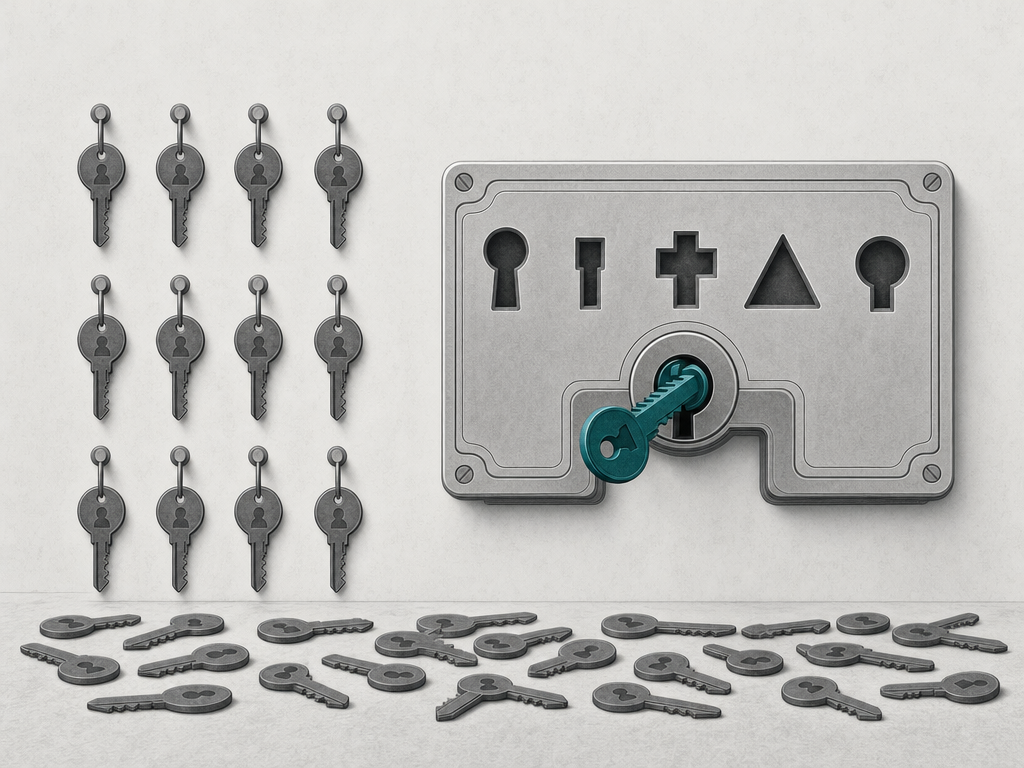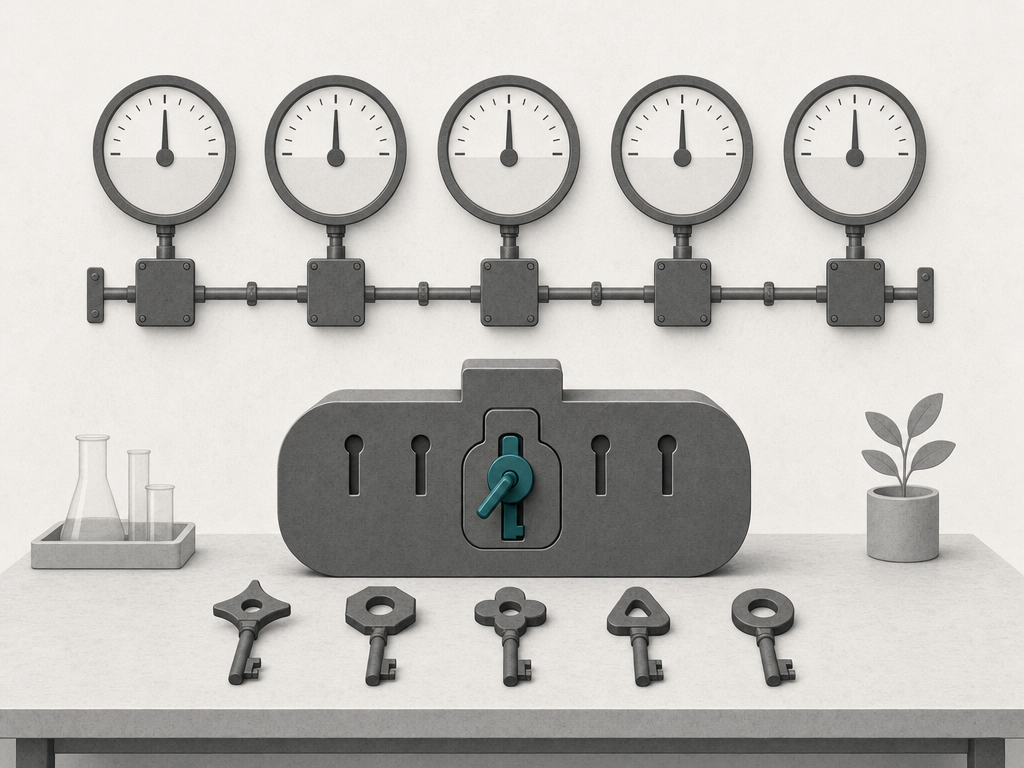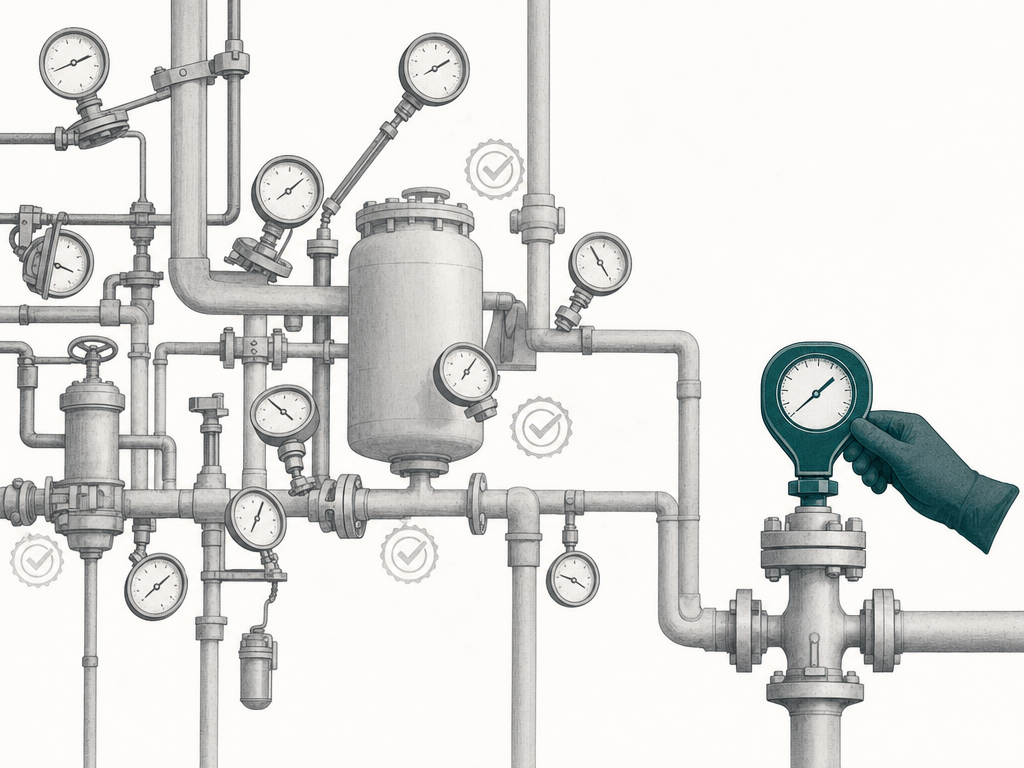
A credible AI visibility service for a pharmaceutical brand queries real AI assistants (ChatGPT, Gemini, Perplexity, Claude, Grok) across five buyer-journey themes (discovery, evaluation, product and capability, commercial, support) and delivers findings ranked by impact. Proxy-signal reports and generic SEO offerings do not meet that bar. For pharma, where buyers shortlist suppliers before a vendor is ever contacted, that gap matters.
Why most AI visibility services are not what they claim to be (and why pharma makes this worse)
Most AI visibility services on the market do not test real AI assistants. They run the same SEO toolkit they always have, measure proxies like domain authority, keyword coverage, and backlink profiles, then present the output under an AI visibility label. The logic is that proxies correlate with assistant behavior. Sometimes they do. But the only direct way to know how ChatGPT or Perplexity answers a buyer's question about your company is to ask it and read the answer.
Pharma makes this gap worse for a specific reason. Procurement in this industry is a long qualification process, and much of the shortlisting happens before a supplier hears from anyone. An API manufacturer, a CDMO, an excipient supplier: each gets filtered in or out during research the buyer never announces. When that research increasingly runs through AI assistants, a proxy-based report tells you nothing about whether you survived the filter. You can hold strong SEO metrics and still be absent from the assistant's answer, or described inaccurately in it.
What an AI visibility service should actually do
An AI visibility service should ask real AI assistants the questions your buyers ask and report what they say about you. That is the whole function. Everything else, the schema recommendations, the content-clarity fixes, the authority-building work, follows from what the assistants actually return.
Concretely, the service runs a defined set of buyer questions through each major assistant, records whether your brand appears, how it is described, whether the description is accurate, and which competitors surface alongside you or in your place. It then explains why the answers look the way they do and what would change them. Measurement first, recommendations second. A service that leads with recommendations before showing you a single assistant transcript has skipped the only step that distinguishes AI visibility work from ordinary content consulting.
Criterion 1: Platform coverage across the five major AI assistants
A service should test ChatGPT, Gemini, Perplexity, Claude, and Grok, because each returns different answers to the same question. These assistants draw on different training data, different retrieval systems, and different handling of citations. A brand that surfaces cleanly in ChatGPT can be invisible in Perplexity, which leans heavily on live citations, or described from stale information in Claude.
Testing one or two platforms gives you a partial map and a false sense of coverage. As a worked example, AEO Dose structures its work so that a Free AI Visibility Check covers two platforms as an entry point, while the Full AEO Readiness Audit covers all five. The point is not the brand; the point is that platform coverage is a scope decision you should see stated plainly in any proposal, not buried or left vague.
Criterion 2: Buyer-journey questions grounded in pharma procurement reality
The questions a service tests should mirror how pharma buyers actually move from discovery to commercial, not generic brand-name lookups. Asking an assistant "what is Company X" tells you almost nothing. Asking "which CDMOs handle sterile fill-finish for small-batch biologics" or "who supplies GMP-grade excipients for controlled-release formulations" tells you whether you exist in the answer set a real buyer would see.
A pharma-literate service builds question sets around the buyer journey: discovery, evaluation, product and capability, commercial, and support. AEO Dose organizes its audit around those five themes and runs ten real buyer questions even in the free tier. A service that cannot show you its question set, or whose questions could apply to any industry, is not testing your buyer journey. It is testing a template. For how buyer-question design separates pharma-literate services from generic ones, see our companion piece on evaluating an AI visibility service's methodology before signing.
Criterion 3: Deliverables ranked by impact, not generic recommendations
A deliverable should tell you what to fix first and why, grounded in the specific answers the assistants gave. A strong report shows you the actual transcript or a faithful summary of it, identifies the gap, and sequences the fixes by what would change the assistant's answer. A weak report hands you a generic checklist: add schema, improve content, build authority, with no connection to what any assistant actually said about you.
The structuring discipline here is a cycle: audit, optimize, build authority, measure, repeat. That matters because AI visibility is not a one-time score. Assistants update, competitors move, and a finding from this quarter can shift. The deliverable should set you up to re-measure, not just to receive a one-off verdict you cannot verify later. Each of the four criteria in this article addresses a different failure mode, and none substitutes for another.
Criterion 4: Pharma-industry grounding in the people doing the work
The people interpreting the findings should understand pharma, because the interpretation is where industry knowledge either shows up or exposes itself as absent. An assistant's answer about controlled-system validation, GMP capability, or regulatory positioning means different things to someone who has worked inside pharma operations than to a generalist marketer reading it cold.
My own background is a B.Pharma degree followed by more than twelve years in Pharma ERP implementation and Computer System Validation. I mention it not as a credential parade but because it illustrates the criterion: the person reading your audit should be able to tell whether an assistant's description of your capabilities is accurate or confidently wrong, and a generic AI or marketing specialist often cannot. Ask who interprets the findings and what they know about your corner of the industry.
Here is the honest limit. None of this guarantees you a ranking, a placement, or a fixed percentage improvement in how assistants describe you. AI visibility work tells you where you stand and what to change. It does not control what five independent assistants decide to say. Any service promising guaranteed lift is selling certainty that does not exist.
Free Check vs Full Audit: matching service scope to where you are
A Free AI Visibility Check makes sense when you want to know whether you have a problem; a Full AEO Readiness Audit makes sense when you already know you do and need the complete picture. The free tier is a diagnostic entry point: two platforms, ten real buyer questions, enough to see whether your brand surfaces and how it is described. The full audit covers all five platforms and all five buyer-journey themes, built for a brand ready to act on a complete map.
The decision is about where you are in your own process, not about budget alone. If you have never queried an assistant about your company, start with the check. If a check already showed gaps, the free tier has done its job and a fuller scope is the sensible next step. For a closer look at when a Free AI Visibility Check is enough and when to upgrade to a Full Audit, the cluster walks through the decision in detail.
Red flags that signal a repackaged SEO offering
A red flag worth watching is a proposal that never shows you a single AI assistant answer. If the methodology talks about keyword rankings, domain authority, and backlinks but cannot produce a transcript of what ChatGPT or Gemini actually said about you, it is SEO with a new label. Other signals: question sets that could apply to any industry, platform coverage left vague, deliverables that are generic checklists disconnected from any assistant output, and guarantees of ranking or percentage improvement.
Turnaround is worth noting too. A service that genuinely queries assistants can return a first read quickly; AEO Dose responds within one to two business days. A vendor that needs weeks before showing you anything may be running a pipeline built for something else. For a catalogue of red flags in AI visibility service proposals for pharma brands, the cluster treats the topic directly.
A practical next step for evaluating services this week
This week, write down ten questions a real buyer would ask about your category, then run them yourself through ChatGPT and Perplexity and read what comes back. You do not need a vendor to do this first pass. Record whether your brand appears, whether the description is accurate, and which competitors surface instead. That exercise will give you a direct read on how assistants describe you today, and a baseline to judge any service's proposal against. When you want a structured version across more platforms and the full buyer journey:
Get a clear, honest baseline of how AI platforms talk about your pharma brand today.
Get Your Free AI Visibility Check