There is no reliable average cost for pharma AI visibility work yet because AEO is roughly two years old and pricing varies by platform count, question depth, competitive benchmarking and remediation scope. AEO Dose's concrete anchor is a Free AI Visibility Check of 2 platforms and 10 questions versus a Full AEO Readiness Audit across ChatGPT, Gemini, Perplexity, Claude and Grok. You will learn how to compare scope before comparing price.
What you'll learn
- Why a market average is not a useful buying benchmark yet
- Which scope dimensions actually explain AEO audit pricing
- Why platform count changes the amount of audit work
- How buyer-journey question depth changes audit quality and price
- Why benchmarking and remediation should be scoped separately
- Why SEO pricing is a poor shortcut for evaluating AEO quotes
- What to ask vendors before comparing AEO proposals
Why there is no reliable average cost for pharma AEO work yet
There is no defensible average cost because the pharma AEO market has not produced stable public pricing benchmarks with comparable scope. A dollar range without platform count, question count, segment context, competitive depth and remediation boundaries is not a benchmark. It is a number detached from the work.
This is where the industry-standard pricing article format misleads buyers. The familiar template lists a low range, a mid range and an enterprise range, then pretends the buyer has been informed. For pharma suppliers, that format is weak because an API manufacturer, CDMO, excipient supplier, nutraceutical brand and oral care manufacturer are not asking the same buyer questions.
A useful quote must explain what is being tested. Is the vendor checking whether ChatGPT names the company at all? Is the audit asking comparison questions about a molecule class, dosage form, manufacturing capability, geography, documentation support or commercial-fit scenario? Is the work limited to visibility measurement, or does it include remediation planning?
Until the scope is visible, an imagined average creates misallocated effort. A buyer can overpay for a polished report built on generic prompts. The same buyer can also underpay for a narrow scan that never tests the questions procurement, R&D, regulatory or commercial teams would actually ask.
The scope dimensions that actually drive audit price
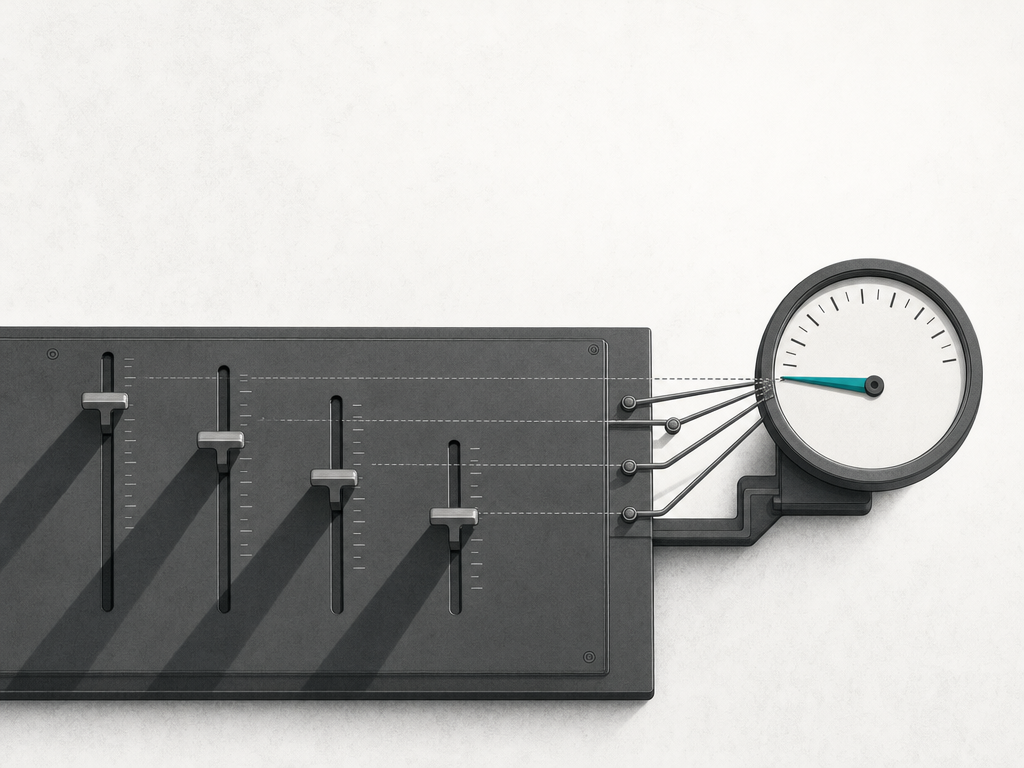
The price of a pharma AEO audit is driven by what the vendor has to test, interpret and translate into decisions. Four dimensions matter for scope evaluation: platform count, question depth, competitive benchmarking and remediation scope.
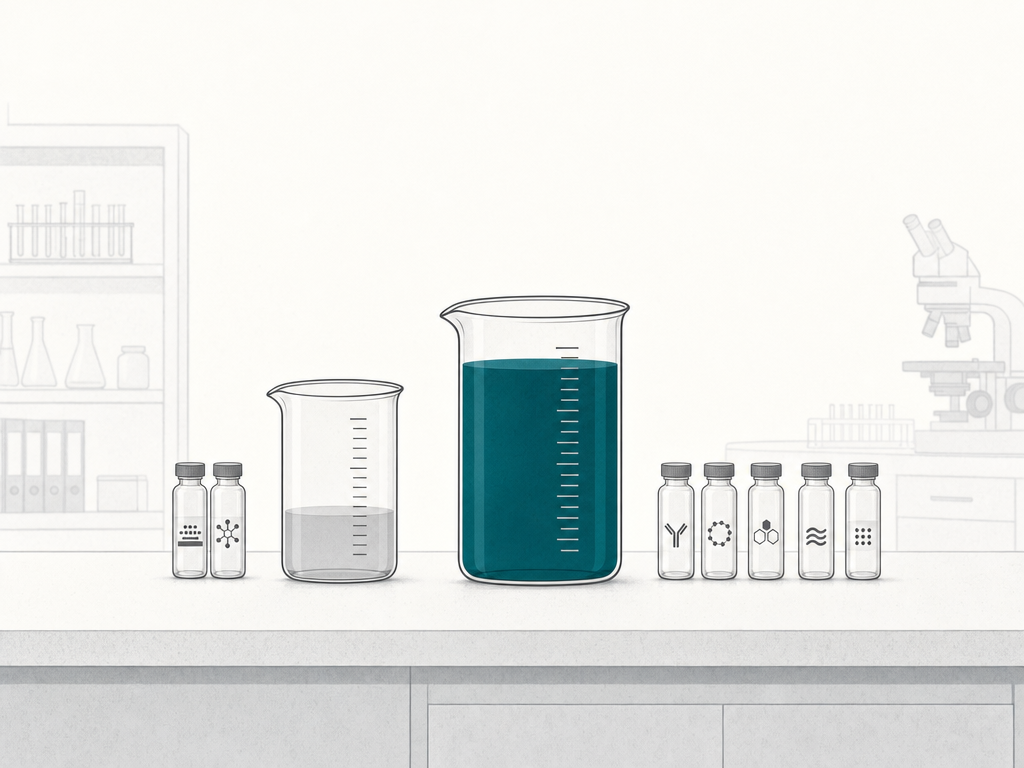
Platform count defines how many answer engines are tested. A two-platform check gives a narrower view than a five-platform audit across ChatGPT, Gemini, Perplexity, Claude and Grok. Each platform has different answer behavior, source preferences, citation patterns and refusal boundaries.
Question depth defines whether the audit tests a thin list of generic prompts or a structured set of buyer-journey scenarios. A ten-question check can identify obvious visibility gaps. A fuller audit can test discovery, evaluation, product or capability, commercial and support themes.
Competitive benchmarking adds another layer. It does not only ask, "Are we visible?" It asks, "Which alternatives are being surfaced, in what context, with what claims, and from what evidence base?"
Remediation scope determines what happens after the measurement. A diagnostic report is one scope. A prioritized content, entity and authority plan is another. Implementation support, content briefing, schema recommendations and measurement follow-up add further work. Buyers should ask vendors to separate these parts instead of accepting one blended line item.
Platform count: why testing 2 platforms costs less
Testing 2 platforms costs less than testing 5 because each platform has to be prompted, reviewed and interpreted as its own evidence environment. AEO Dose's Free AI Visibility Check uses 2 platforms and 10 questions, while the Full AEO Readiness Audit covers 5 platforms: ChatGPT, Gemini, Perplexity, Claude and Grok. For a deeper process view, the Audit and Optimization Process cluster explains how checks and audits fit into a broader measurement cycle.
The difference is not just more screenshots. A platform can mention a supplier but omit the category that matters. Another can cite a distributor, marketplace, directory or publication instead of the supplier's own site. Another can describe a capability in vague language that would not help a buyer shortlist the company.
The work expands because the analyst has to compare answer patterns across engines. If Gemini surfaces a company for "pharma grade excipient supplier" but Perplexity cites third-party directories instead, the finding is not simply "visible" or "not visible." The audit has to identify the source layer, the entity signal, the category language and the evidence gaps behind that difference.
A narrow two-platform check can be useful when the buyer wants an initial signal. A five-platform audit is built for a different decision: whether the company needs structured remediation across the current AI answer landscape.
Question depth and buyer-journey themes
Question depth changes price because pharma buyers do not ask one generic question when evaluating a supplier. A useful AEO audit has to test multiple buyer-journey themes: discovery, evaluation, product or capability, commercial and support.
Discovery questions ask whether a company appears when a buyer begins with a category need, such as finding CDMOs for a dosage form or suppliers for a material type. Evaluation questions ask how the company is compared against alternatives. Product and capability questions test whether answer engines understand what the business can actually manufacture, supply or support. Commercial questions reflect buying constraints, including region, minimum order logic, partnership type or documentation expectations. Support questions test whether AI systems surface useful post-contact or technical information.
This is why generic question lists produce cheaper but weaker audits. "Who are the best pharma suppliers?" is not the same as "Which excipient suppliers support formulation work for a specific oral solid dose use case?" A nutraceutical brand, API manufacturer, CDMO and oral care product manufacturer each needs questions that reflect how its buyers search and evaluate. For segment-specific visibility issues, the Industry-Specific Visibility Challenges cluster is the relevant next layer.
A vendor quoting a low price may have removed the work that makes the audit useful: mapping buyer questions to the way actual procurement, formulation, regulatory and commercial teams frame their needs.
Competitive benchmarking and remediation scope
Competitive benchmarking and remediation should be priced as separate scope items because they answer different questions. Benchmarking explains who else appears and why. Remediation explains what the company should change to improve its evidence base.
A visibility-only audit can say whether the company appears for a prompt. Competitive benchmarking adds context: which competitors, directories, distributors, trade media pages or review-style sources are shaping the answer. That work can reveal whether the issue is weak category language, poor entity consistency, missing third-party evidence, thin technical pages or a lack of comparison-relevant content.
Remediation scope is different again. It can include a prioritized action plan, page-level recommendations, schema guidance, entity consistency fixes, content briefs, source-building recommendations and measurement design. These activities require interpretation beyond the audit output.
A buyer should not accept a proposal that bundles everything under "AI visibility optimization" without explaining what is included. That phrase can mean a one-time prompt test, a structured audit, a content plan, an implementation project or an ongoing measurement program. The cost cannot be evaluated until the deliverable boundaries are written down.
How AEO pricing differs from SEO pricing
AEO pricing differs from SEO pricing because the work is not limited to rankings, search volume and website optimization tasks. SEO pricing gives a weak shortcut for AEO because AI answer engines synthesize entities, claims and evidence across sources before producing an answer.
In SEO, a buyer typically asks about keyword research, technical fixes, content production, backlinks and reporting cadence. Those categories are familiar enough that scope conversations tend to use shared vocabulary. In AEO, the audit has to examine how answer engines describe the company, whether they cite it, whether they confuse it with another entity, which sources they rely on and whether the buyer's actual questions are represented in the evidence layer.
That does not make SEO irrelevant. It means SEO pricing cannot be copied into AEO pricing without losing the mechanism. AEO work may involve website content, but it also includes entity clarity, third-party source alignment, platform-by-platform answer testing and buyer-journey prompt design. For a foundational distinction, see the Understanding AI Visibility and AEO cluster.
The practical issue is simple: if a vendor prices AEO like a generic SEO package, ask what answer engines, prompts, categories and evidence sources are included. If those items are not defined, the quote is not ready for comparison.
A checklist of questions pharma buyers should ask
A pharma buyer should compare AEO quotes only after each vendor has answered the same scope questions. Use this checklist before treating two proposals as equivalent.
- Which AI platforms will be tested: ChatGPT, Gemini, Perplexity, Claude, Grok, or a smaller set?
- How many questions will be tested, and are they provided before the audit starts?
- Are the questions mapped to discovery, evaluation, product or capability, commercial and support themes?
- Are questions customized for our segment, such as CDMO, API, excipient, nutraceutical or oral care?
- Will the audit capture whether we are mentioned, cited, compared, omitted or mischaracterized?
- Will the vendor identify the sources AI systems are using to form the answer?
- Is competitive benchmarking included, or is it a separate line item?
- Does the report distinguish between visibility gaps, entity gaps, content gaps and authority gaps?
- Is remediation limited to recommendations, or does it include implementation support?
- Will the vendor explain what is not included in the quote?
- How will findings be documented so internal teams can act on them?
- What will be measured again after remediation work is completed?
Cheap AEO quotes become risky when they avoid these questions. A lower price may be reasonable for a narrow check. It becomes underscoped when it is presented as a full audit but excludes platform coverage, buyer-journey depth, competitive context or remediation planning.
For buyers comparing vendors, the Comparing AI Visibility Services cluster is the next place to pressure-test proposal quality.
Get Your Free AI Visibility Check
Start Free CheckFrequently asked questions
Why is there no reliable average cost for AI visibility work in pharma right now?
There is no reliable average because the AEO market is still young and public pricing is not standardized around comparable scope. A quote can cover a small prompt check, a full platform audit, competitive benchmarking, remediation planning or implementation support. Those are different services. Without knowing platform count, question depth, benchmarking scope and remediation boundaries, an average price would hide the actual work being bought.
What scope dimensions actually drive the price of an AEO audit?
The scope dimensions are platform count, question depth, competitive benchmarking and remediation scope. Platform count defines how many AI systems are tested. Question depth defines how many buyer scenarios are examined and how specific they are. Competitive benchmarking adds analysis of which alternatives appear and why. Remediation scope determines whether the vendor only diagnoses gaps or also provides an action plan, implementation support or follow-up measurement.
What is the difference between a Free AI Visibility Check and a Full AEO Readiness Audit?
A Free AI Visibility Check is a narrower diagnostic designed to give an initial signal. AEO Dose's version uses 2 platforms and 10 questions. A Full AEO Readiness Audit uses a broader scope across 5 platforms: ChatGPT, Gemini, Perplexity, Claude and Grok. The larger audit is designed to surface more platform-specific patterns, buyer-journey gaps, competitive context and remediation priorities. The two tiers are different quantities of work, not the same work at different price points.
How does the number of AI platforms tested affect cost?
Platform count affects cost because each AI system has to be tested and interpreted separately. ChatGPT, Gemini, Perplexity, Claude and Grok can surface different suppliers, cite different sources and describe capabilities in different ways. Adding platforms expands the review work and the cross-platform analysis. A two-platform check can show an initial visibility signal, while a five-platform audit gives a broader view of the current answer environment.
How do buyer-journey themes change the depth and price of an audit?
Buyer-journey themes change depth because pharma buyers ask different questions at different stages. Discovery prompts test whether a supplier appears for category needs. Evaluation prompts test comparisons. Product or capability prompts test technical fit. Commercial prompts test buying constraints. Support prompts test documentation and post-contact information. Covering these themes requires more custom question design and more interpretation than running a short generic prompt list.
What does competitive benchmarking add to the scope and cost?
Competitive benchmarking adds a second layer of querying and interpretation beyond basic visibility measurement. It asks which alternatives are surfaced for the same buyer questions, in what context, and from which sources. That work can reveal whether weak visibility is caused by competitor dominance, directory citations, trade media coverage or entity-recognition problems. Because benchmarking expands both the testing and the analysis work, it should appear as a separate line item in a quote.
What are signs that a cheap AEO quote is underscoped?
A quote is underscoped when it does not name the platforms tested, the number of questions, the buyer-journey themes, the competitive benchmarking method or the remediation deliverables. It is also weak when it promises broad AI visibility improvement without explaining what will be measured. A narrow quote can be valid if it is labeled as narrow. The problem is a narrow scan packaged as a full audit.